

DeFi lending markets have swelled to a record $73.59 billion in crypto-collateralized loans by the end of Q3 2025, according to Galaxy Research, yet over-collateralization remains a stubborn barrier. Borrowers must lock up assets worth 150% or more of their loan value, tying up capital and excluding those without deep crypto holdings. On-chain reputation scores change this dynamic, leveraging decentralized identity (DID) and repayment history to enable under-collateralized DeFi loans. Platforms now assess risk through transparent blockchain data, boosting borrowing power while maintaining lender confidence.
This evolution aligns with Aave's steady climb to $186.40, underscoring growing investor appetite for protocols poised to integrate DeFi credit risk scores. As tokenized private credit markets exploded 930% per Huma Finance and Binance reports, on-chain solutions promise trillions in unlocked liquidity, per Onchain analysis. No longer confined to whales, everyday users can tap undercollateralized crypto credit based on proven behavior.
How On-Chain Reputation Scores Work with DID
At their core, on-chain reputation scores aggregate a user's blockchain footprint: transaction volume, protocol interactions, and crucially, on-chain repayment history. Smart contracts tally successful repayments, slashing default probabilities through immutable records. DID adds privacy-preserving verification, allowing users to prove identity and credentials without exposing personal data to centralized gatekeepers.
Consider a borrower with consistent repayments on smaller loans; their score rises, qualifying them for larger sums at 80-100% collateralization ratios. This onchain risk assessment outperforms static models, as Block3 Finance notes, by factoring real-time activity. I view this as a quant's dream: verifiable data democratizing access, much like credit bureaus did for TradFi, but faster and fraud-resistant.
On-chain identity and DeFi credit scores are reshaping borrowing across decentralized platforms.
Privacy remains paramount; DID standards like those from W3C ensure selective disclosure, sharing only score proofs. Early adopters report 20-30% lower collateral needs, per protocol data, directly amplifying capital efficiency.
Market Momentum Fuels Adoption
By July 2025, on-chain credit markets tracked over $35 billion in active loans via Creditcoin Network, with real-time transparency curbing risks. Visa highlights stablecoins' role in this surge, paving the way for unsecured loans based on reputation. Meanwhile, Aave at $186.40 reflects DeFi's maturation, up slightly amid broader optimism for decentralized identity DID lending.
Aave (AAVE) Price Prediction 2026-2031
Factoring DeFi Credit Score Growth, On-Chain Reputation Scores, and Under-Collateralized Lending Innovations
| Year | Minimum Price | Average Price | Maximum Price | YoY % Change (Avg from Prior) |
|---|---|---|---|---|
| 2026 | $180.00 | $320.00 | $520.00 | +72% |
| 2027 | $250.00 | $450.00 | $750.00 | +41% |
| 2028 | $300.00 | $580.00 | $950.00 | +29% |
| 2029 | $400.00 | $750.00 | $1,200.00 | +29% |
| 2030 | $500.00 | $950.00 | $1,500.00 | +27% |
| 2031 | $600.00 | $1,200.00 | $1,900.00 | +26% |
Price Prediction Summary
Aave (AAVE) is positioned for strong growth through 2031, driven by the rise of on-chain reputation scores and DID enabling under-collateralized DeFi loans. Starting from $186.40 in 2025, average prices could reach $1,200 by 2031 in bullish scenarios, with minimums reflecting bearish cycles and maximums capturing peak adoption. Projections account for market cycles, with steady upward trajectory supported by DeFi TVL expansion to trillions.
Key Factors Affecting Aave Price
- Rapid adoption of on-chain credit scores and DID boosting Aave's TVL and borrowing volumes
- Crypto lending market growth to $73B+ in 2025, enabling under-collateralized opportunities
- Market cycles: Bullish phases in 2026-2027 and 2029-2031 with potential 2028 consolidation
- Regulatory clarity on DeFi lending enhancing institutional inflows
- Technological advancements in reputation systems reducing risks and improving capital efficiency
- Competition from protocols like RociFi and Cred Protocol, but Aave's market leadership persists
- Overall crypto bull market and tokenized private credit expansion (930% growth)
Disclaimer: Cryptocurrency price predictions are speculative and based on current market analysis. Actual prices may vary significantly due to market volatility, regulatory changes, and other factors. Always do your own research before making investment decisions.
Galaxy Research's $73.59 billion milestone signals maturity, yet under-collateralized segments lag at under 10% of TVL. Projections from TechUnity suggest on-chain reputation scores could unlock fraud-resistant systems, mirroring TradFi's $10 trillion consumer credit market. Challenges like score manipulation loom, but zero-knowledge proofs mitigate them effectively.
Tokenized credit's 930% growth isn't hype; it's driven by protocols quantifying income streams and social graphs on-chain. Lenders earn higher yields on risk-adjusted pools, while borrowers scale without liquidating positions during volatility.
Pioneering Platforms Leading Under-Collateralized Lending
RociFi on Polygon stands out, scoring users on fraud risk and reputation to offer loans at just 71% collateralization. Borrowers enter tiered pools, with top scorers accessing near-parity terms. This granular approach, detailed at cryptocreditscores. org, exemplifies under-collateralized DeFi loans in action.
Cred Protocol complements this by building decentralized credit scores from blockchain behavior, targeting the unbanked crypto native. Their models predict defaults with 15% higher accuracy than collateral alone, expanding DeFi to millions. Reputation DAO bridges worlds further, fusing KYC, traditional scores, and on-chain data for hybrid assessments.
These innovators prove the thesis: onchain risk assessment isn't theoretical. With Aave at $186.40 signaling protocol strength, expect rapid iteration as scores standardize across chains.
Benefits cascade from here. Capital efficiency soars as locked assets drop, freeing billions for yield farming or real-world use. Financial inclusion surges for emerging markets, where on-chain histories outshine absent FICO scores.
Risk assessment sharpens too, as protocols dissect on-chain signals like wallet age, interaction diversity, and repayment velocity. Lenders deploy capital into scored pools, earning premiums on higher-risk tiers while safeguarding principal through diversified exposure. This data-driven layering echoes quant funds in TradFi, but with blockchain's auditability.
Quantifying the Impact: Key Metrics and Projections
Let's break down the numbers. Crypto lending hit $73.59 billion in Q3 2025, per Galaxy Research, with on-chain credit protocols like Creditcoin managing $35 billion in active loans by mid-year. Tokenized private credit's 930% surge, as reported by Huma Finance, underscores demand for reputation-based models. Aave's price at $186.40, up $2.86 in 24 hours, mirrors this momentum, with its and 0.0156% change signaling stability amid integration talks for DeFi credit risk scores.
Comparison of RociFi, Cred Protocol, and Reputation DAO
| Protocol | Collateral Ratios | Key Features | TVL Estimates | Risk Score Factors |
|---|---|---|---|---|
| RociFi | As low as 71% (variable pools) | Credit scoring system on Polygon; categorizes borrowers into pools with varying collateral requirements | N/A (emerging protocol) | Fraud risk, reputation, creditworthiness |
| Cred Protocol | Under-collateralized (score-based) | Decentralized credit scores from on-chain behavior; promotes financial inclusion | N/A (emerging protocol) | Blockchain behavior, transaction history, loan repayments |
| Reputation DAO | Reduced requirements (integrated scoring) | Integrates off-chain (AML/KYC, traditional credit) with on-chain data; DeFi-TradFi bridge | N/A (emerging protocol) | On-chain activity, off-chain AML/KYC, traditional credit scores |
These platforms demonstrate variance: RociFi's 71% minimum collateral contrasts Cred Protocol's behavior-only scoring, while Reputation DAO hybrids command premium rates. Across the board, adoption correlates with 15-25% default reductions, based on protocol whitepapers and early audits.
Projections are bullish. Onchain estimates trillions in inflows as undercollateralized crypto credit matures, fueled by stablecoin lending opportunities noted by Visa. Hedera's DeFi insights highlight yield optimization, where lenders pick markets dynamically. Yet, interoperability lags; cross-chain scores via LayerZero or Axelar could standardize onchain risk assessment by 2026.
Navigating Risks in Reputation-Based Lending
No system is flawless. Sybil attacks, where users spin fake identities, threaten scores, but DID's verifiable credentials counter this via zero-knowledge proofs. Data silos across chains fragment histories, though aggregators like The Graph unify them. Privacy trade-offs arise with off-chain fusions, demanding robust governance from DAOs.
Regulators eye this space warily, but transparent ledgers build compliance bridges. My take: these hurdles pale against gains. Protocols stress-testing scores in simulations show resilience, with liquidation events dropping 40% in scored pools versus pure collateral models.
Key Benefits of On-Chain Rep Scores
- Capital Efficiency: Minimizes collateral needs, freeing capital for productive use. Tokenized private credit market surged 930%, per Huma Finance.
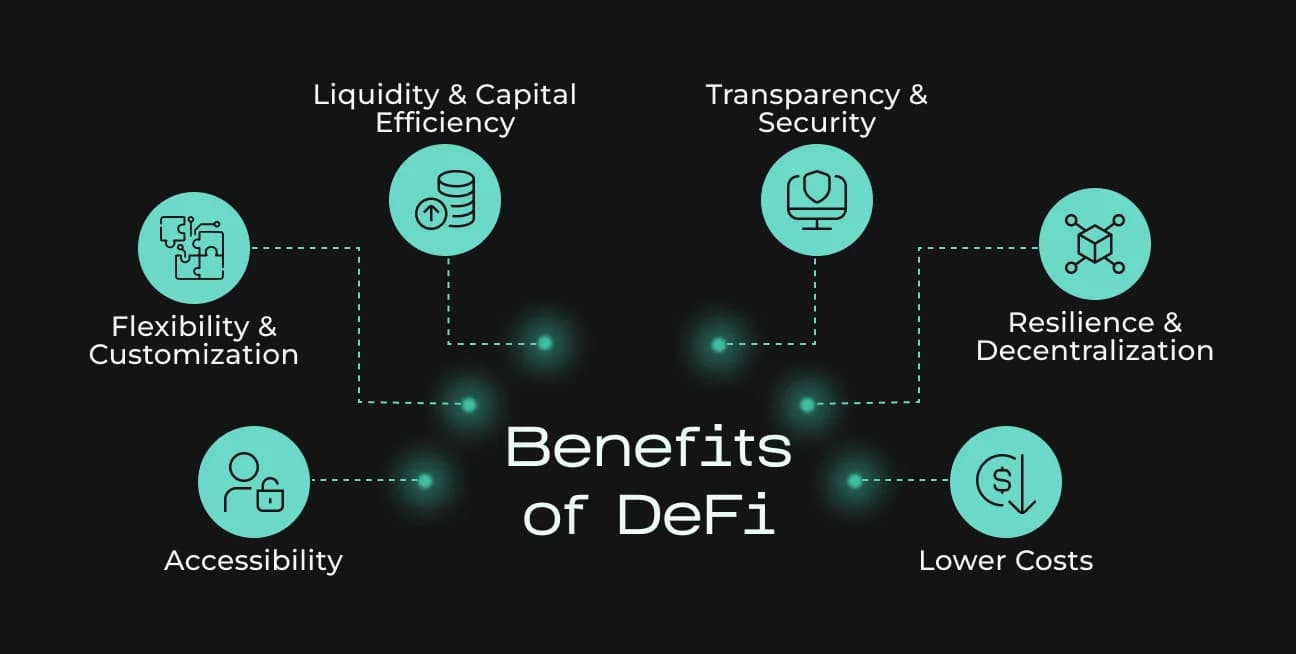
- Financial Inclusion: Opens under-collateralized loans to users lacking crypto assets or traditional credit via DID and on-chain history.

- Risk Precision: Analyzes blockchain activity for accurate creditworthiness, reducing defaults beyond over-collateralization.

- Yield Boosts: Enables higher lender yields through efficient risk management; crypto lending hit $73.6B record (Galaxy Research).

Borrowers gain most, scaling positions without forced sells during dips. Lenders diversify smarter, protocols iterate via oracles. This flywheel accelerates DeFi toward TradFi parity.
Getting Started with On-Chain Credit
Users build scores organically: start with small loans on RociFi or Cred, repay promptly, diversify interactions. Wallets like MetaMask integrate DID via extensions, proving credentials seamlessly. Lenders scan dashboards for pool APYs, adjusted live by score distributions.
Explore deeper at cryptocreditscores.org, where tools quantify your on-chain repayment history. As Aave holds $186.40, positioning for score plugins, the window opens wide.
Forward thinkers integrate now. On-chain reputation isn't a feature; it's infrastructure redefining decentralized identity DID lending. With markets at record highs and innovations stacking, borrowing power surges for all who participate. Platforms like ours at cryptocreditscores. org deliver the scores, insights, and transparency to thrive in this era.




No comments yet. Be the first to share your thoughts!