

In the evolving landscape of decentralized finance, undercollateralized DeFi loans represent a pivotal shift from the rigid over-collateralization model that has long defined crypto lending. Borrowers today often must lock up 120% to 300% of their loan value in volatile assets, tying up capital and excluding those without deep crypto reserves. Yet, by harnessing onchain risk scores derived from transparent repayment histories, protocols are unlocking more efficient, inclusive lending. This approach analyzes blockchain data to gauge creditworthiness, reducing collateral needs while maintaining lender confidence.
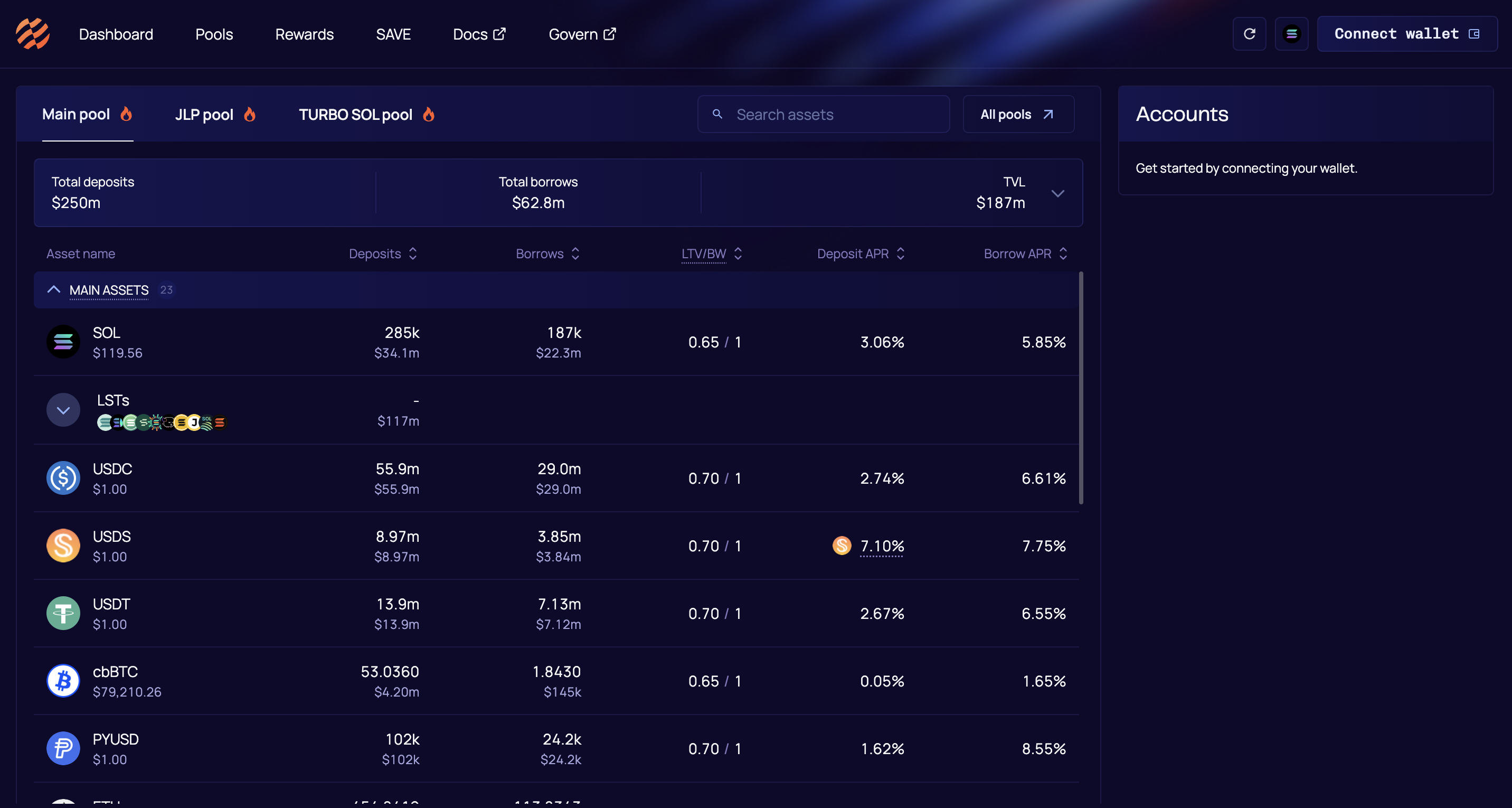
Consider the mechanics: traditional DeFi platforms like Aave and Compound thrive on excess collateral to mitigate defaults amid pseudonymity. This safeguards lenders but stifles growth; capital sits idle, and liquidation risks loom during market dips. Onchain data changes this equation. Transaction histories, repayment patterns, and interaction frequencies become verifiable signals of reliability, much like FICO scores in TradFi but fully decentralized.
The Limitations of Collateral-Heavy DeFi Lending
Over-collateralization, while secure, creates friction. A borrower seeking a $10,000 USDC loan might deposit $15,000 in ETH, exposing them to price swings that trigger liquidations unrelated to repayment intent. Galaxy Research highlights DeFi lending's rebound, yet total value locked remains constrained by these barriers. Protocols now integrate decentralized credit scoring to dynamically adjust loan-to-value ratios, favoring users with proven crypto repayment history.

This isn't mere theory. Platforms leverage decentralized identity (DID) to link pseudonymous addresses to behavioral data, synthesizing fraud detection with Web3 activity. The result? Borrowers with spotless histories access loans at 80-100% LTV, freeing capital for productive use and drawing trillions in latent demand, as forecasted by the Onchain Foundation.
Decoding Onchain Risk Scores
Onchain risk scores distill complex blockchain footprints into actionable metrics. Spectral Finance's Multi-Asset Credit Risk Oracle (MACRO) exemplifies this, evaluating transaction volume, liquidation events, debt repayment timeliness, credit diversity, and history length. A high score signals low default risk, allowing undercollateralized terms.
Unlike off-chain scores reliant on centralized bureaus, these are tamper-proof and real-time. ArXiv research underscores their systematic analysis of on-chain histories for precise DeFi risk assessment. RociFi advances further by blending DID/Web3 scores with fraud databases, crafting holistic profiles that protocols query permissionlessly.

Pioneering Protocols and Their Impact
Credora, Spectra, and Cred lead the charge, combining payment histories with off-chain signals via oracles like Chainlink's DECO for privacy-preserving proofs. These tools verify bank balances or identities without exposure, enabling hybrid models. Visa's insights on stablecoin lending align here: onchain risk models supplant collateral with behavioral data, fostering stable yields.
Read more on how onchain risk scores reduce liquidation risks. For lenders, this means diversified portfolios with mitigated tail risks; borrowers gain access without liquidating holdings. GARP notes pseudonymity's challenges, but efficient scores bridge the gap, enhancing recovery via reputation stakes.
Undercollateralized lending thus promises better yields, as Isaac Tham observes on Medium. Protocols dynamically tune thresholds: a 950/1000 MACRO score might permit 95% LTV on stablecoins, versus 150% for newcomers. This granularity, rooted in verifiable data, propels DeFi toward TradFi parity.
Yet achieving this parity demands thoughtful integration. Protocols must balance score accuracy with oracle reliability, ensuring scores reflect true crypto repayment history without manipulation. Spectral's MACRO, for instance, weights recent behaviors heavily, discounting ancient data to capture evolving risk profiles. This adaptive methodology mirrors human judgment, fostering trust in decentralized credit scoring.
Aave Technical Analysis Chart
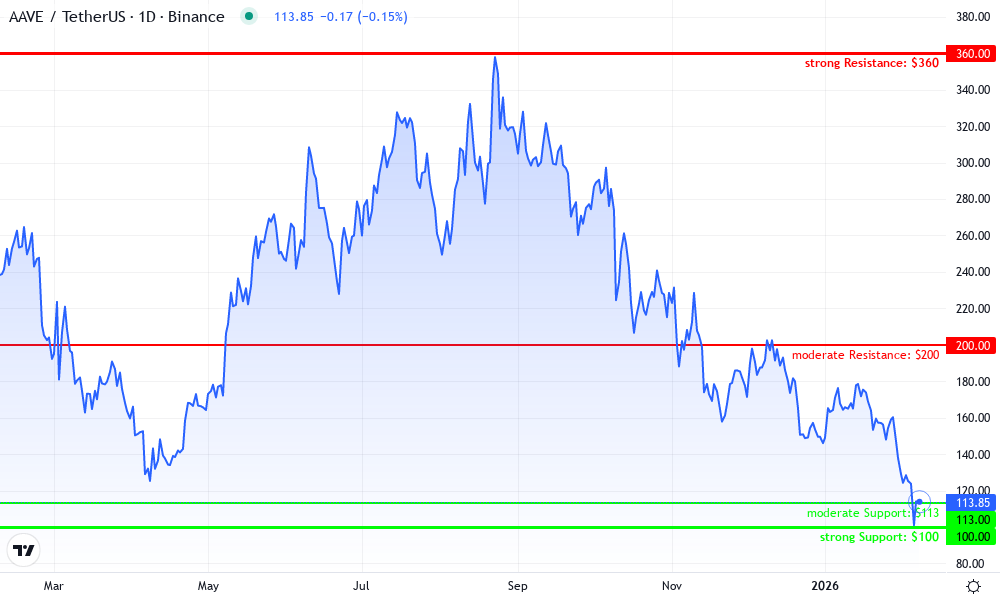
Analysis by Elena Brewster | Symbol: BINANCE:AAVEUSDT | Interval: 1D | Drawings: 9
Technical Analysis Summary
As Elena Brewster, with my hybrid approach blending technical patterns and DeFi fundamentals, I recommend annotating this AAVEUSDT chart with precise drawings to highlight the parabolic uptrend from May 2026 lows, the subsequent breakdown, and key levels for potential reversal amid on-chain credit score innovations boosting lending protocols like Aave. Start with a prominent downtrend line from the September 2026 peak at ~360 connecting to the current November 2026 low around 113, using 'trend_line' in red. Overlay an earlier uptrend line in green from May 2026 base (~110) through July swing high (~250) to September apex. Add horizontal lines at major support 100 (strong), 113 (current pivot), resistance 200 (moderate), 360 (major). Employ fib_retracement from Sep high to Nov low for 50% retrace ~236 target. Mark volume spikes on upleg with upward arrows and recent fade with callouts. Vertical line at estimated Oct 2026 breakdown. Rectangle recent Nov consolidation 100-120. Arrows for entry long above 115 toward 200.
Risk Assessment: medium
Analysis: Volatile crypto lending sector with fundamental tailwinds from on-chain scores, but technical breakdown warrants caution; medium tolerance suits dip-buy
Elena Brewster's Recommendation: Cautious long from support, scale in with tight stops, target 200+ on DeFi momentum resumption
Key Support & Resistance Levels
📈 Support Levels:
- $100 - Psychological and prior low support tested multiple times strong
- $113 - Current price zone with volume cluster moderate
📉 Resistance Levels:
- $200 - 50% fib retrace and prior swing high moderate
- $360 - All-time high in this cycle, major overhead strong
Trading Zones (medium risk tolerance)
🎯 Entry Zones:
- $115 - Bounce from support with volume confirmation, aligned to medium risk hybrid setup medium risk
🚪 Exit Zones:
- $200 - Initial profit target at fib 50% retrace 💰 profit target
- $100 - Invalidation below key support 🛡️ stop loss
Technical Indicators Analysis
📊 Volume Analysis:
Pattern: fading on downside after spike on uptrend
Volume climax on Sep peak suggests distribution; low volume pullback bullish divergence
📈 MACD Analysis:
Signal: bearish crossover post-peak with weakening momentum
MACD histogram contracting, potential bullish divergence forming at lows
Applied TradingView Drawing Utilities
This chart analysis utilizes the following professional drawing tools:
Disclaimer: This technical analysis by Elena Brewster is for educational purposes only and should not be considered as financial advice. Trading involves risk, and you should always do your own research before making investment decisions. Past performance does not guarantee future results. The analysis reflects the author's personal methodology and risk tolerance (medium).
Examine the data: Galaxy Research charts show DeFi lending volumes surging post-bear market, with Aave and Compound leading. Yet undercollateralized niches, powered by scores, exhibit even steeper trajectories. As RWA. io notes, tokenizing real-world assets pairs seamlessly with on-chain histories, stabilizing loans backed by property or invoices rather than pure crypto volatility.
Overcoming Adoption Hurdles
Transitioning to undercollateralized DeFi loans isn't seamless. Pseudonymity persists as a double-edged sword; while DID mitigates it, user adoption lags. Mitosis University details hybrid models blending on-chain and off-chain data, issuing scores via permissioned oracles. Chainlink's DECO exemplifies privacy: zero-knowledge proofs attest to repayment streaks without revealing addresses, vital for institutional inflows.
Critics argue default rates could spike sans collateral buffers. My view? Verifiable histories outperform static pledges. A borrower with 50 flawless repayments trumps one hiding behind ETH dumps. GARP's risk management lens supports this: efficient scores enable proactive monitoring, slashing recovery costs through socialized reputation penalties.
Consider Credora's track record: lenders query scores for real-time pricing, adjusting rates from 5% for elites to 20% for novices. This meritocracy unlocks yields topping 15% APY on stablecoins, per Visa's onchain lending analysis, outpacing TradFi margins while democratizing access.
A Roadmap for Borrowers and Lenders
For borrowers, cultivate your score deliberately. Engage stable protocols early, repay promptly, diversify interactions. A robust DeFi risk assessment profile emerges organically, slashing collateral demands over time. Lenders, integrate oracles like MACRO via composable smart contracts; query scores on borrow, dynamically set LTVs.
Explore further in our guide on how onchain risk scores enable undercollateralized lending in DeFi 2025 guide. Real-world pilots, such as RociFi's fraud-blended models, report 30% capital efficiency gains, with defaults under 2% for top tiers. Isaac Tham's Medium piece echoes this: better data yields superior risk-adjusted returns.
Looking ahead, as DID matures and layer-2 scaling cuts fees, onchain scores will permeate all DeFi verticals. Imagine yield farming with reputation-backed leverage or RWAs collateralized by cross-chain histories. This isn't hype; it's the logical evolution, backed by arXiv's rigorous frameworks and Onchain Foundation's trillions-scale projections.
DeFi's promise has always been borderless finance. Onchain risk scores deliver by prioritizing behavior over hoarded assets, reshaping lending into a merit-driven arena. Users worldwide, from emerging markets to institutions, stand to benefit as protocols refine these tools, heralding an era of truly efficient capital deployment.




No comments yet. Be the first to share your thoughts!