

Picture this: you're a DeFi power user with a killer NFT collection from your favorite generative art drop. You want to borrow against it for some high-yield farming, but the market turns, liquidity dries up, and boom - your art-backed loan defaults. We've seen it too many times with illiquid collateral risks tanking even the savviest borrowers. Enter onchain risk scores, the smart fix flipping undercollateralized crypto lending on its head without the collateral headaches.
DeFi lending kicked off with overcollateralization as the safety net - deposit 150% or more to borrow. It's straightforward, sure, but it locks up capital like a vault during a bull run. Borrowers hate tying up liquidity, lenders sleep easier, yet the whole system screams inefficiency. Sources like Chainlink and Bankless nail it: undercollateralized crypto lending is the future, promising better yields and real-world usability, but only if we dodge those art-backed disasters.
Illiquid Collateral: The Silent Killer in DeFi Loans
Art-backed loans sound glamorous - fractional ownership of a Beeple or CryptoPunk as collateral. Reality? NFTs and rare tokens plummet 90% in bear markets, leaving lenders holding worthless pixels. SSRN research highlights how overcollateralization dominates because traditional collateral fails under volatility. Remember those 2022 blowups? Protocols using illiquid assets faced mass defaults when floor prices evaporated.
It's not just art. RWAs like tokenized real estate or vintage wine tokens suffer the same fate. No deep order books mean fire-sale liquidations barely cover principal. Jump Crypto's paradigms report spells it out: overcollateralization drains borrower liquidity, stifling growth. Undercollateralized setups fix this by leaning on reputation over assets.
Overcollateralized vs. Undercollateralized Lending: Pros/Cons, Capital Efficiency & Risk Factors
| Category | Overcollateralized Lending | Undercollateralized Lending |
|---|---|---|
| Pros | ✅ High security for lenders via liquidation mechanisms ✅ No need for borrower credit assessment | ✅ Superior capital efficiency 📈 ✅ Unlocks borrower liquidity 💰 ✅ Potential for higher yields |
| Cons | ❌ Capital inefficient (e.g., 150-800% ratios) ❌ Locks up borrower assets | ❌ Higher default risk ❌ Requires sophisticated on-chain credit scoring |
| Capital Efficiency | Low 📉 (excess collateral required) | High 📈 (leverages creditworthiness) |
| Risk Factors | ⚠️ Market volatility triggers liquidations ⚠️ Illiquid collateral failures (e.g., art-backed defaults) | ⚠️ Borrower default on credit ⚠️ Inaccurate on-chain data or scoring errors |
Overcollateralization's Hidden Costs Exposed
Galaxy Research's deep dive into crypto lending reveals opacity as the big issue. Lenders demand 200% collateral to buffer crashes, but that excludes normies without fat stacks. Medium pieces from Isaac Tham and Clear Chain Capital call undercollateralized lending DeFi's holy grail since 2017 - higher yields for lenders, freer capital for borrowers.
Yet risks loom. Without smart DeFi credit scoring, protocols can't trust strangers. Enter on-chain data: wallets with clean repayment histories, low liquidation counts, and steady transaction flows scream 'low risk. ' CoinGecko questions if this is lending's future - I say yes, but only with ironclad scores.
Key Wins of On-Chain Risk Scores
- Ultimate Transparency: Immutable blockchain data makes borrower histories publicly auditable—no black boxes, just verifiable trust like in Goldfinch.

- Lightning Efficiency: Real-time scoring via smart contracts slashes approval times and costs, unlocking faster capital deployment as in Credix.
- Lower Defaults: Analyzes transaction patterns and past liquidations for smarter risk models, cutting failures from illiquid collateral like art-backed loans.
Onchain Risk Scores: Building Trust Without the Bloat
Mitosis University breaks down how protocols blend on-chain and off-chain signals for creditworthiness. Think wallet age, borrow-to-repay ratios, even social proofs via DID. Goldfinch and Credix pioneer this, scoring real-world assets with AI models. The updated 2026 context? DeFi's shifting hard - quantitative scores from blockchain histories enable nuanced lending, slashing illiquid collateral risks.
These scores aren't fluffy. They quantify behavior: did you repay on time across Aave? Dodge liquidations in 2022? High score means borrow at 80% LTV, no sweat. Vital Soupel's LinkedIn take? DeFi democratizes credit via smart contracts. Pair that with scores, and we avoid art-backed pitfalls altogether. Lenders get reduced liquidation risks, borrowers unlock potential. It's actionable magic for traders like me chasing momentum without collateral chains.
Imagine scoring a loan based on your wallet's battle scars - not some JPEG's mood swing. Platforms like cryptocreditscore. org are leading the charge, using decentralized identity and transparent repayment histories to craft these scores. It's not theory; it's live, cutting collateral needs and turbocharging DeFi efficiency.
Aave Technical Analysis Chart
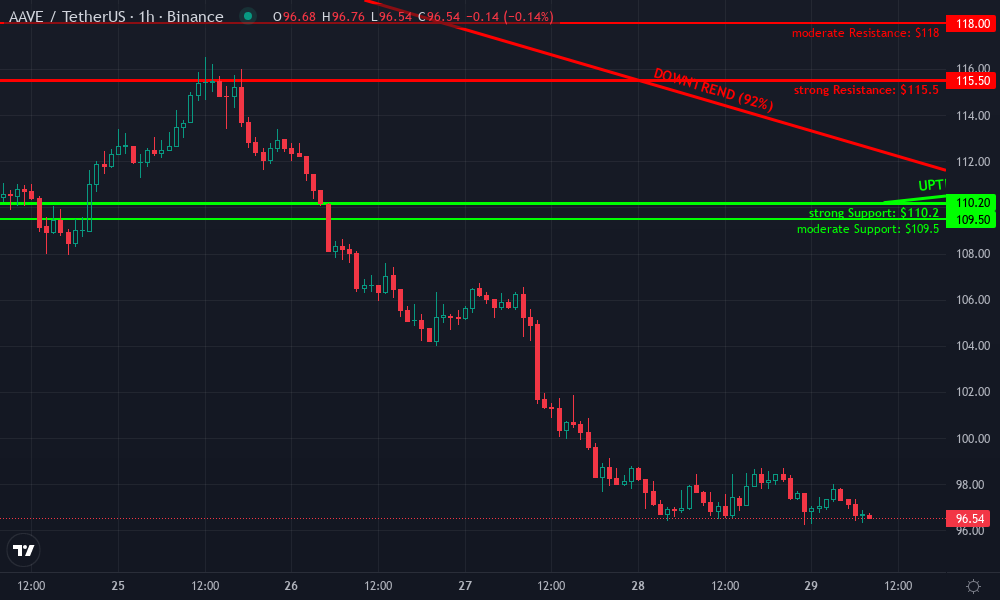
Analysis by Lucas Fenwick | Symbol: BINANCE:AAVEUSDT | Interval: 1h | Drawings: 6
Technical Analysis Summary
Yo traders! 🔥 Lucas Fenwick here, smashing this AAVEUSDT chart like a boss! 🚀 Draw that killer downtrend line from the 119 peak on 2026-03-26 straight to the 110 dump on 2026-03-30 – red alert! 💥 Add horizontal lines at key S/R: support 110.2 (strong hold), resistance 115.5 (fight zone). Fib retracement 0.618 at 113 for pullback plays. Mark long entry zone at 110.5 with green long_position icon, arrow_mark_up on that tiny green hammer bounce. Callout on volume spike: 'Bear climax!' 📈 Short-term swing long incoming if holds 110! #DeFiBeast #AAVEtoMoon
Risk Assessment: high
Analysis: Choppy downtrend in volatile DeFi token, oversold bounce potential but breakdown risk if 110 cracks. Aligns with my high-risk swing style.
Lucas Fenwick's Recommendation: Load longs aggressively at 110.8! 🚀 High RR setup, scale in half size. No FOMO, trade the chart! 💥 #LucasFenwickAlpha
Key Support & Resistance Levels
📈 Support Levels:
- $110.2 - Recent swing low with wick rejection + volume support strong
- $109.5 - Psycho round number extension moderate
📉 Resistance Levels:
- $115.5 - Mid-dump retrace level, prior consolidation high strong
- $118 - Major breakdown origin moderate
Trading Zones (high risk tolerance)
🎯 Entry Zones:
- $110.8 - Aggressive long on hammer bounce from support + MACD hist divergence high risk
🚪 Exit Zones:
- $116.5 - Profit target at resistance confluence + fib 0.618 💰 profit target
- $109 - Tight stop below swing low for 1:3 RR 🛡️ stop loss
Technical Indicators Analysis
📊 Volume Analysis:
Pattern: Climax selling volume on downside then taper-off
Bearish volume surge on dump, now drying up – reversal signal! 📉➡️📈
📈 MACD Analysis:
Signal: Bearish but histogram divergence (shrinking reds)
MACD line below signal but hist bars contracting – bullish flip loading!
Applied TradingView Drawing Utilities
This chart analysis utilizes the following professional drawing tools:
Disclaimer: This technical analysis by Lucas Fenwick is for educational purposes only and should not be considered as financial advice. Trading involves risk, and you should always do your own research before making investment decisions. Past performance does not guarantee future results. The analysis reflects the author's personal methodology and risk tolerance (high).
Let's break it down. Onchain risk scores pull from your full blockchain resume: repayment velocity, liquidation dodges, even cross-protocol consistency. A wallet that's repaid 50 loans on time across Compound and Aave? That's prime borrower material, eligible for undercollateralized terms at 90% LTV. Low scores? Stick to overcollateralized or improve your habits. This data-driven gatekeeping slashes illiquid collateral risks by prioritizing behavior over volatile assets.
Art-Backed Defaults: Lessons Learned and Scores That Save
Art-backed loans? They've been a DeFi minefield. Remember those NFT lending protocols in 2022 where floor prices cratered 95%, triggering cascade defaults? Lenders clawed back pennies on the dollar because illiquid markets meant no buyers at liquidation price. Art backed loan defaults expose the flaw: tying credit to assets that swing wildly. Onchain scores flip the script - assess the human (or wallet) behind the art, not the art itself. If your history shows smart risk management, borrow against that CryptoPunk without the 300% buffer.
Take Goldfinch: they've issued millions in undercollateralized credit to emerging markets, blending onchain signals with junior/senior tranches for lender protection. Defaults? Minimal, thanks to rigorous scoring. Credix does similar for RWAs, proving DeFi credit scoring scales beyond crypto natives. It's opinion time: we're witnessing TradFi's credit bureaus reborn onchain, minus the bias and black boxes.
On-Chain Risk Score Tiers for Undercollateralized Loans
| Risk Tier | Indicator | Max LTV | Est. Default Rate | Example Protocols |
|---|---|---|---|---|
| Low | 🟢 | 150% | <1% | Goldfinch |
| Medium | 🟡 | 130% | 2-5% | Credix, Maple |
| High | 🔴 | 110% | >5% | Experimental protocols |
But no rose-tinted glasses - challenges persist. Onchain data can be gamed with sybils, and new wallets start scoreless. Solutions? Time-weight recent behavior heavier, integrate DID for uniqueness, and layer offchain oracles sparingly. Mitosis University nails this hybrid approach, ensuring scores evolve with the chain. The 2026 shift underscores it: volatility tamed by history, not excess collateral.
Actionable Steps: Level Up Your Borrowing Game Today
Ready to ditch collateral chains? Start by auditing your wallet on platforms like cryptocreditscore. org. Check your onchain risk scores - clean history? Hunt undercollateralized opportunities on Goldfinch or emerging protocols. Lenders, integrate these scores to juice yields without heart attacks. Swing traders like me love it: borrow lean, farm hard, repay fast, repeat.
Compare protocols side-by-side. Goldfinch shines for global borrowers, while TrueFi edges on speed for crypto pros. Scores enable this choice - no more one-size-fits-all overcollateralization. And for those art collectors? Use scores as a backstop; collateralize lightly if your reputation backs it up. Head to onchain risk scores enabling undercollateralized DeFi loans for the deep dive.
DeFi's lending renaissance is here, fueled by undercollateralized crypto lending that trusts proven players. We've sidestepped illiquid traps, unlocked capital, and built a fairer game. Your move: build that score, borrow bold, and watch your portfolio momentum surge. 🚀




No comments yet. Be the first to share your thoughts!