

DeFi lending has long been shackled by over-collateralization requirements, demanding borrowers lock up 120% to 300% of loan values in volatile crypto assets. This setup, while safeguarding lenders against price swings, stifles capital efficiency and sidelines users without deep pockets. Enter onchain risk scores, a game-changer enabling undercollateralized crypto loans at ratios as low as 50% LTV. By mining transaction histories for behavioral insights, these scores unlock trillions in trapped capital, as projected by the Onchain Foundation.

Traditional DeFi protocols like Aave and Compound enforce rigid collateral buffers to counter crypto’s wild volatility. Yet, this model echoes TradFi’s early days, where collateral demands excluded the masses. Recent innovations in DeFi credit scoring flip the script, leveraging decentralized identity (DID) and on-chain repayment data to gauge true risk. Protocols such as Goldfinch and Credix already issue real-world asset (RWA) loans with minimal collateral, targeting emerging markets where trust is scarce but opportunity abounds.
The Mechanics of Onchain Risk Assessment
Onchain risk scores dissect a user’s blockchain footprint: repayment consistency, wallet age, interaction diversity, and even cross-chain behavior. AI models, trained on vast datasets, assign dynamic scores that evolve with activity. Unlike static FICO scores, these are transparent and verifiable, fostering trust without intermediaries. AInvest reports that by 2025, maturing AI and cross-chain interoperability have propelled this shift, making low collateral lending DeFi viable.

https://t.co/OBcvY82QiU
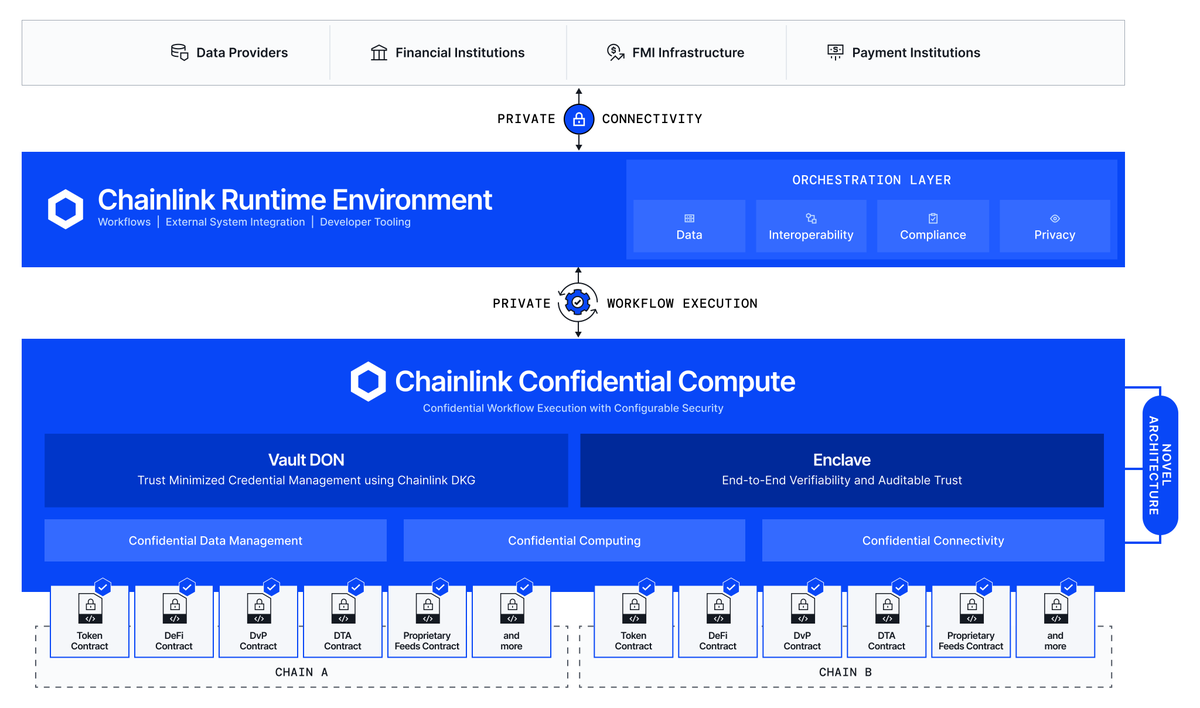
Consider a borrower with a spotless onchain repayment history. Their score might permit 50% LTV loans, versus 150% for newcomers. This granularity slashes liquidation risks, as scores flag deteriorating patterns early. Chainlink’s insights on onchain private lending underscore how under-collateralized structures mirror institutional credit, minus the opacity.
From Over-Collateral to Capital Efficiency
Over-collateralization ties up billions; DeFi TVL hovers around inefficient architectures, per RWA analyses showing 78% of protocols breed systemic risk. The agile 22%? They’re surging via credit-based models. Visa’s stablecoin lending paper highlights how smart contract integration modernizes access, with onchain scores as the linchpin.
https://t.co/OBcvY82QiU
Real-World Protocols Driving the Shift
Goldfinch pioneers with on-chain analytics fused to off-chain diligence, disbursing millions in RWA loans at sub-100% LTV. Credix follows, blending AI risk models with borrower reps. These aren’t hypotheticals; they’re live, reshaping DeFi from leverage playground to inclusive finance hub. Bankless dubs it the next frontier: programmable systems where risk scores dictate terms dynamically. For lenders, this means higher yields sans excessive exposure; for borrowers, liquidity without asset dumps.
Challenges persist, though. Default rates could spike sans flawless data. Here, continuous monitoring via DID and oracles proves vital, as cryptocreditscore. org emphasizes in its DID deep-dive. Still, the trajectory is clear: onchain risk scores are compressing collateral needs, injecting efficiency into a $21B RWA wave.
To counter these hurdles, protocols are layering in multi-tiered safeguards. Off-chain oracles feed real-time data into onchain models, while DID systems verify identities without compromising privacy. This hybrid approach, detailed in cryptocreditscore. org’s analysis on how onchain risk scores enable undercollateralized lending in DeFi, ensures scores reflect holistic risk profiles. Lenders gain granular controls, adjusting LTVs dynamically based on score thresholds and market conditions.
Quantifying the Efficiency Gains
Picture this: a borrower with a 750 and onchain score accesses a $100,000 loan at 50% LTV, posting just $50,000 in collateral. Contrast that with traditional DeFi’s $150,000-$300,000 lockup. Capital freed up cascades through the ecosystem, amplifying TVL and yields. Data from the $21B RWA sector shows the top 22% of protocols, those embracing credit scoring, outpacing peers by orders of magnitude. Undercollateralized models don’t just cut collateral; they redistribute risk intelligently, prioritizing onchain repayment history over asset dumps.
Key Metrics
| Protocol | Collateral Ratio | Avg LTV | Default Rate |
|---|---|---|---|
| Goldfinch | 80-120% | 60% | <2% |
| Credix | 70-100% | 50-70% | 1.5% |
| Aave (Traditional) | 150-300% | 66% | 0.5% via liquidation |
These figures, drawn from live deployments, illustrate the trade-off: slightly elevated defaults offset by broader participation and higher throughput. NBFCs dipping into blockchain loans via DeFi platforms exemplify this, issuing to underserved borrowers with solid onchain track records.
Skeptic Concerns vs. Onchain Risk Score Solutions for 50% LTV DeFi Loans
| Concern | Onchain Risk Score Solution | Benefit |
|---|---|---|
| Synthetic stablecoin depegs (e.g., USDX, xUSD, deUSD in Nov 2025) | Cross-chain analytics flags anomalies like wallet dilutions & oracle drifts | Dynamic Risk Adjustment – Real-time updates prevent blowups ⚡ |
| Repeat defaulters | Reputation-weighted lending with escalating penalties (per Duredev) | Verifiable Trust – Blockchain proof over KYC 🔒 |
| TradFi black-box models | Transparent scoring with DID & AI-driven models (e.g., Goldfinch, Credix) | Capital Efficiency – Unlock 2-3x liquidity 💰 |
| Limited access | Empower emerging markets via onchain records | Inclusive Access – Solid onchain history for global borrowers 🌍 |
| Increased default risk | Robust on-chain risk assessment & continuous monitoring | Higher Yields for lenders with managed exposure 📈 |
Implementation isn’t plug-and-play. Developers must integrate DID standards like those from cryptocreditscore. org, ensuring scores propagate across chains. Early adopters in prediction markets, as DWFLabs highlights, are testing waters with undercollateralized positions tied to onchain reps.

The Road Ahead for DeFi Lenders
By 2026, expect onchain scores to standardize, much like FICO did for banks. Visa’s stablecoin thesis aligns here: smart contracts plus scores modernize lending at scale. Protocols will tier users – platinum repayers at 30% LTV, novices at 100%. This granularity fuels trillions in inflows, per Onchain Foundation forecasts. For institutions eyeing RWAs, how on-chain risk scores enable under-collateralized crypto loans in 2025 offers the blueprint.
Lenders, sharpen your edge with these tools. Borrowers, build that pristine onchain repayment history. The shift to undercollateralized crypto loans isn’t coming; it’s here, compressing collateral while expanding horizons. DeFi matures from speculative bets to a trust machine, one score at a time.
About the Author