

In the high-stakes world of DeFi lending, overcollateralization has long been the ironclad rule: lock up far more value than you borrow, or walk away empty-handed. But this model excludes vast swaths of users who lack the liquid assets to pledge upfront. Enter on-chain reputation scores, a game-changing shift powered by tools like Ethereum Attestation Service (EAS) and Soulbound Tokens (SBTs). These mechanisms evaluate your blockchain track record, transaction history, and on-chain behaviors to unlock undercollateralized DeFi loans – capital access without the collateral straitjacket.

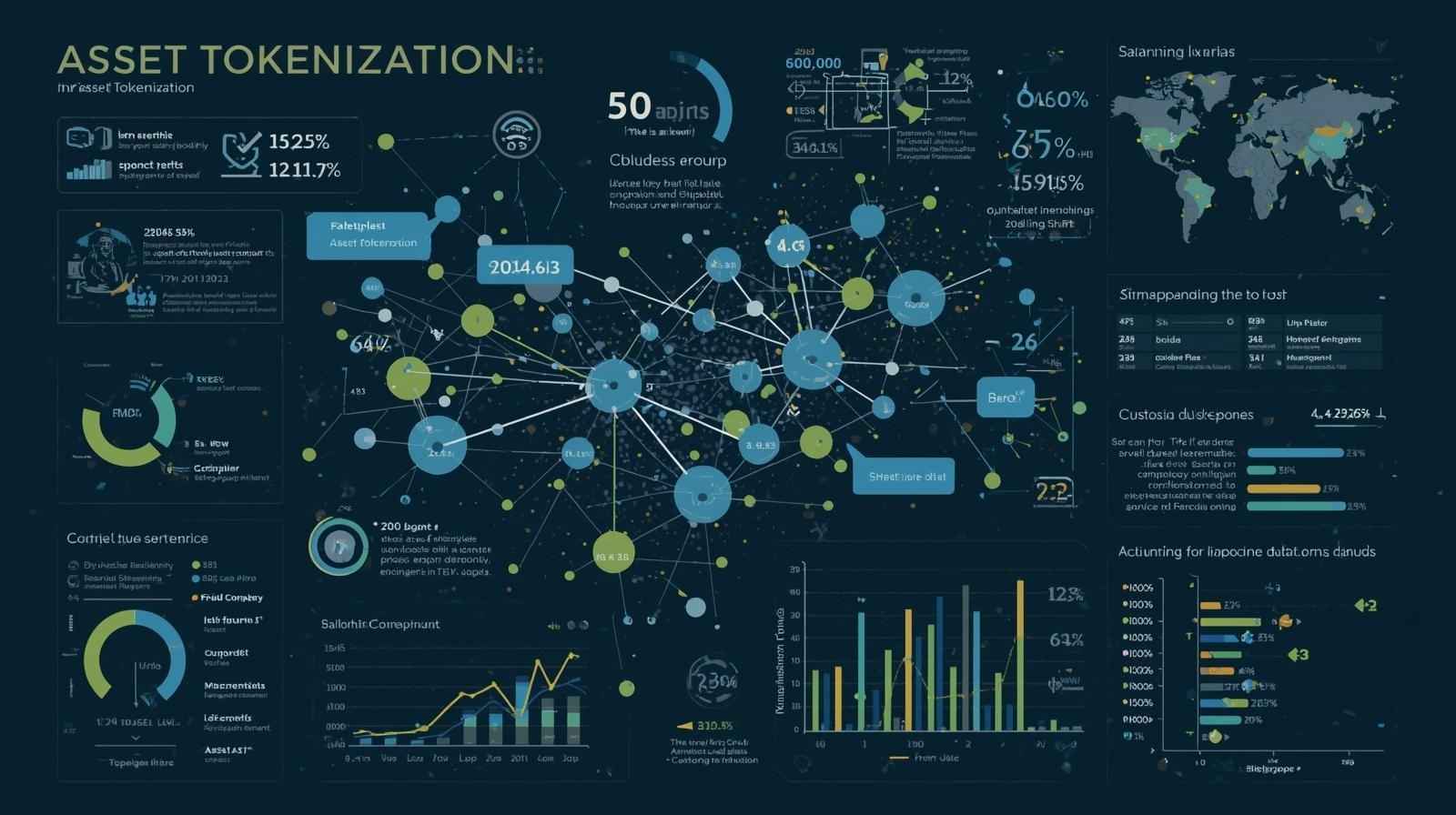
This isn’t pie-in-the-sky theory. Protocols are already scoring billions of wallet addresses based on real data. Providence, spearheaded by Andre Cronje, pored over 60 billion transactions from 15 million loans across 20 and chains, assigning scores anonymously tied to addresses – no KYC needed. It’s a stark contrast to traditional finance’s opaque black boxes, delivering transparent, verifiable trust signals that lenders crave.
The Limitations of Collateral-Only Lending and the Rise of Reputation-Based Risk Assessment
DeFi’s collateral-heavy protocols like Aave and Compound dominate because they minimize default risk through liquidation bots. Yet, when health factors dip below 1, undercollateralized positions trigger ruthless liquidations, as noted in rigorous academic surveys. This fragility stifles broader adoption. Borrowers must overcommit capital, tying up funds that could fuel yield farming or trading elsewhere.
Undercollateralized lending flips the script. Platforms like RociFi have minted nearly 22K non-fungible credit scores (NFCS) for retail loans, proving viability. Borrowers rely on DeFi credit scoring derived from repayment histories, wallet age, interaction frequency with reputable protocols, and even governance participation. Decentralized credit bureaus such as ReputeX and Credora aggregate these into unified scores, blending on-chain purity with off-chain oracles where needed – think Chainlink’s DECO for secure data feeds.
Fundamentally, uncollateralised lending allows borrowers to access capital without locking up assets. Instead, they rely on reputation. (DL News)
This evolution aligns incentives: good actors build lasting scores, bad ones face escalating rates or blacklisting. Capital efficiency soars, inclusion expands to underbanked crypto natives, and DeFi inches toward mimicking TradFi’s nuance without centralized gatekeepers.
Ethereum Attestation Service: The Backbone of Verifiable On-Chain Reputation
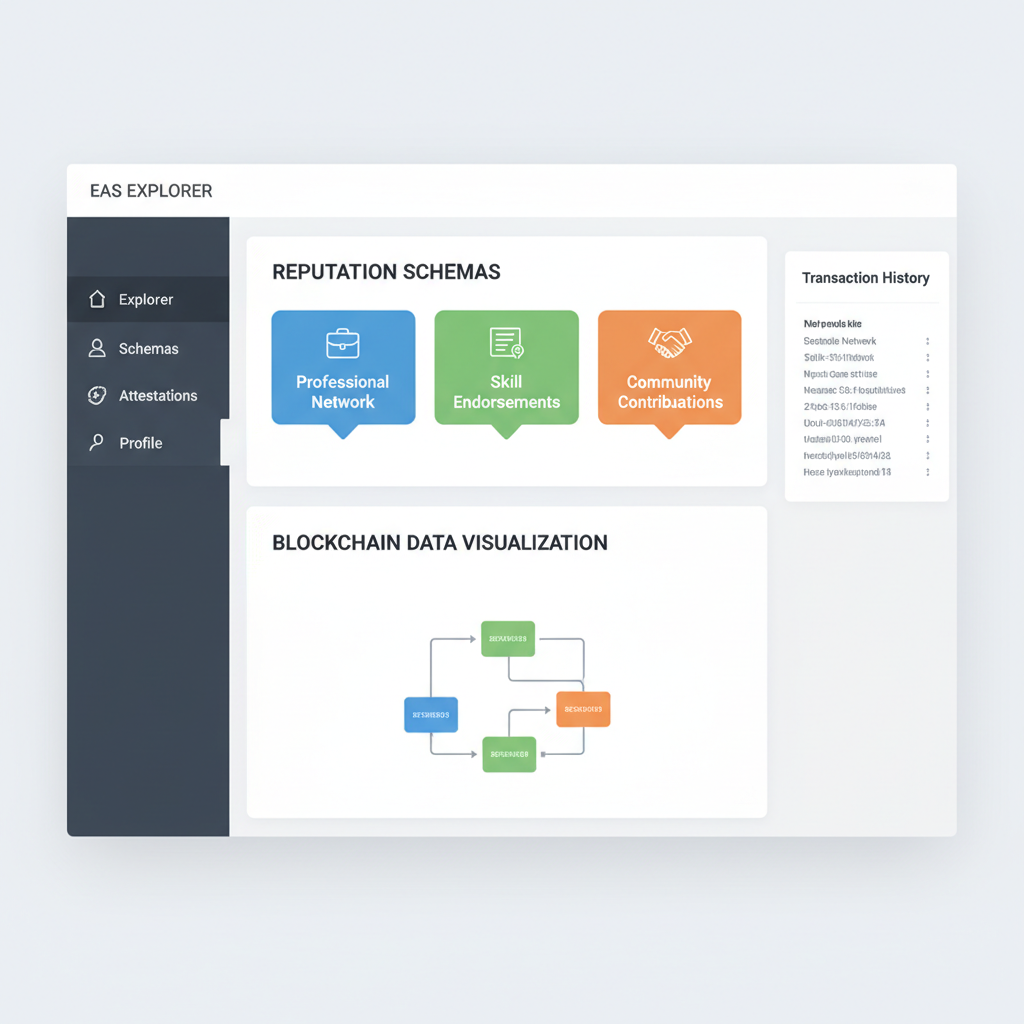
At the heart of modern onchain risk assessment lies Ethereum Attestation Service (EAS), a decentralized protocol for issuing tamper-proof claims about any on-chain entity. Picture it as a blockchain notary: anyone can attest to a wallet’s traits – loan repayments, DAO votes, or NFT mints – with cryptographic signatures ensuring immutability.
EAS schemas define structured data, like “repaid-loan: amount, timestamp, lender. ” Aggregators then compute composite scores, weighting factors such as recency and volume. Providence leverages this to score over 1 billion addresses, factoring in cross-chain activity via bridges. No more siloed reputations; your Ethereum deeds inform Base or Optimism loans seamlessly.
Privacy stays paramount. Scores link to addresses pseudonymously, preserving DeFi’s ethos. Lenders query via APIs, deciding LTV ratios dynamically: a 850-score wallet might snag 90% undercollateralized terms, while a newbie grinds from scratch.
Soulbound Tokens and MetisDAO: Locking Reputation to Your Wallet Forever
Soulbound Tokens (SBTs), formalized in EIP-4973 and EIP-5192, take non-transferability to the next level. Unlike tradeable NFTs, SBTs are soulbound – etched permanently to your address, representing unalienable proofs of merit. Think digital badges for repaid loans, community contributions, or protocol loyalty.
MetisDAO’s Reputation Power (RP) exemplifies this. Users accrue RP via on-chain actions – staking, voting, liquidity provision – then mint SBT badges. These feed into lending decisions, weighting votes in governance or unlocking better loan terms. It’s a flywheel: act well, earn badges, access capital, repeat.
Building yours starts simple: engage protocols issuing EAS attestations, like repeated small loans on RociFi. Stack SBTs from DAOs or games, and watch aggregators like those at CryptoCreditScores.org compile your profile. Early movers gain first-mover advantages as adoption snowballs.
Reputation doesn’t accrue overnight; it demands deliberate on-chain activity. Start with low-risk protocols that issue attestations for every repayment, gradually scaling to larger positions. Over time, your score compounds, much like interest in a savings account, but powered by public verifiability.
Step-by-Step: Crafting Your On-Chain Reputation for Undercollateralized Access
Build Your On-Chain Reputation: EAS Attestations to SBTs for DeFi Loans


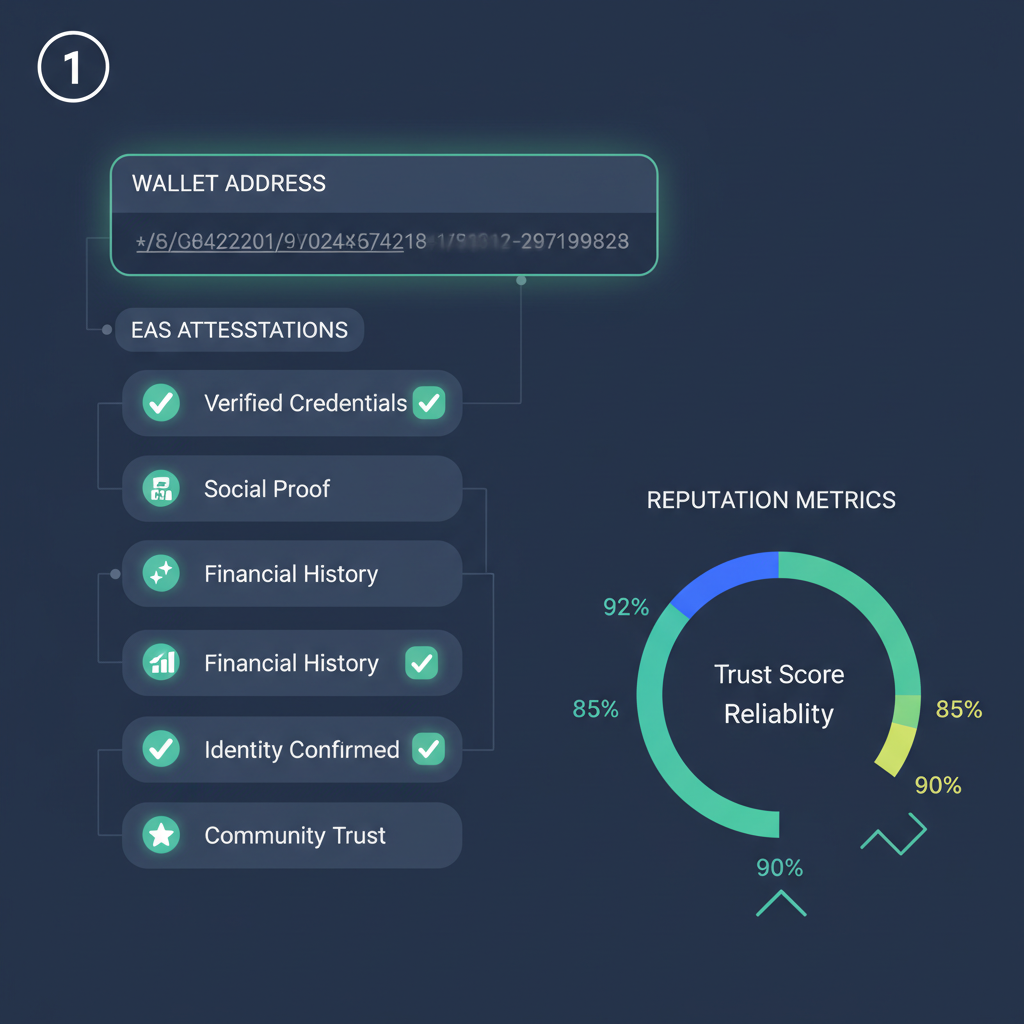


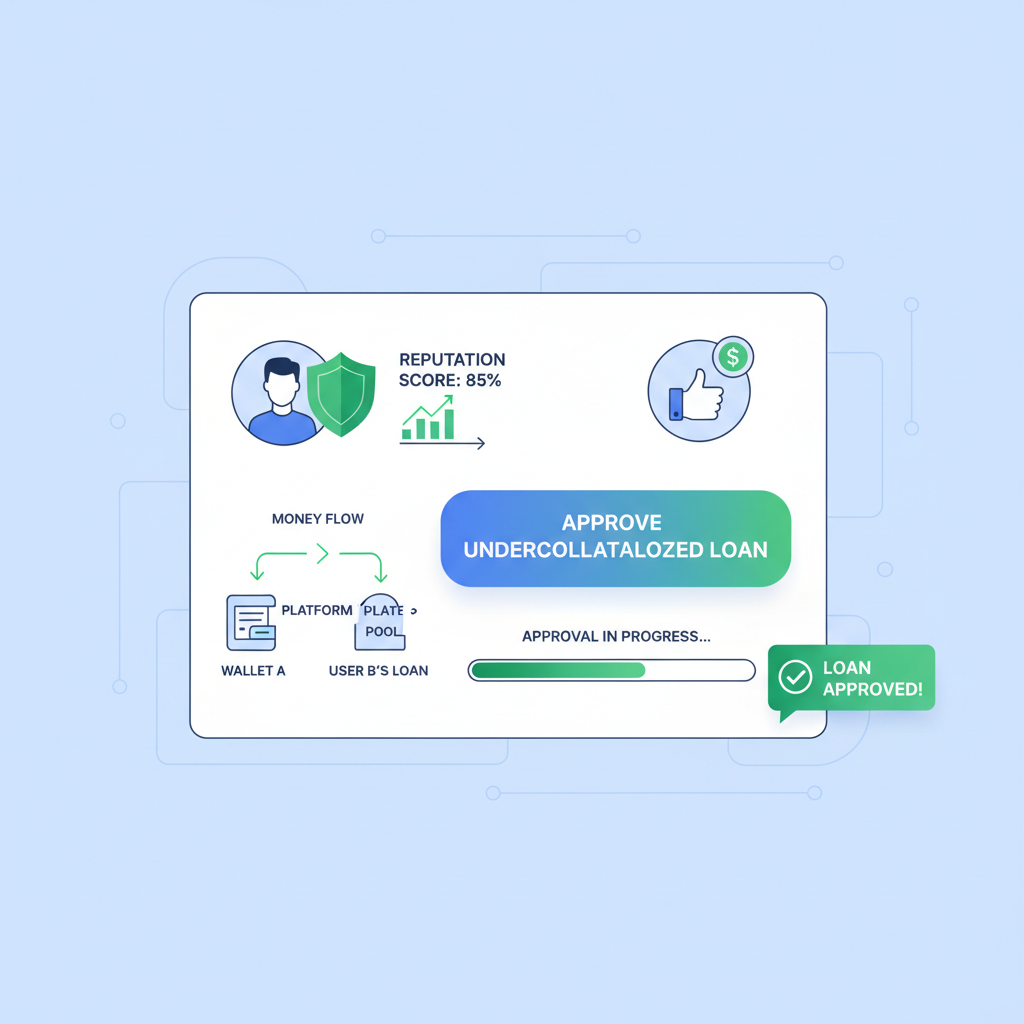
Once your profile solidifies, lenders like those on Huma Finance or RociFi pull your score via APIs, adjusting terms in real time. A strong history might yield loans at 5% APR with minimal or no collateral, versus 20% and for unproven wallets. This dynamic pricing reflects true risk, not arbitrary thresholds.
Implementation hinges on standards. EAS schemas standardize attestations, ensuring interoperability. For instance, a lender attests: “User X repaid $10K USDC on 2026-02-14. ” Aggregators parse these into metrics – repayment ratio, delinquency rate, average loan size – feeding machine learning models for holistic onchain risk assessment.
Solidity Example: Emitting EAS Attestation for Loan Repayment
In an undercollateralized DeFi lending protocol, attesting to loan repayments on-chain via EAS builds verifiable reputation. First, register an EAS schema like `uint256 loanId,uint256 amountRepaid,bool onTime,uint256 timestamp` to define the structure. Then, integrate it into your Solidity smart contract as shown below. This example demonstrates emitting an attestation upon repayment, which can aggregate into reputation SBTs.
```solidity
// SPDX-License-Identifier: MIT
pragma solidity ^0.8.19;

import {IEAS, AttestationRequest} from "eas-contracts/contracts/IEAS.sol";

contract UndercollateralizedLoanProtocol {
    IEAS private immutable eas;
    bytes32 public immutable loanRepaymentSchemaUID;

    constructor(IEAS _eas, bytes32 _loanRepaymentSchemaUID) {
        eas = _eas;
        loanRepaymentSchemaUID = _loanRepaymentSchemaUID;
    }

    struct LoanRepaymentData {
        uint256 loanId;
        uint256 amountRepaid;
        bool onTime;
        uint256 timestamp;
    }

    /// @notice Records a loan repayment via EAS attestation to build on-chain reputation
    /// @param borrower Address of the borrower
    /// @param loanData Data about the repayment
    function attestLoanRepayment(address borrower, LoanRepaymentData calldata loanData) external {
        require(msg.sender == borrower || /* lender or authorized */, "Unauthorized");

        AttestationRequest memory req = AttestationRequest({
            schemaUID: loanRepaymentSchemaUID,
            recipient: borrower,
            expirationTime: uint64(block.timestamp + 365 days),
            revocable: true,
            refUID: bytes32(0),
            data: abi.encode(loanData),
            value: 0
        });

        eas.attest(req);
    }
}
```
This attestation provides tamper-proof proof of repayment behavior. Lenders can query these attestations to compute dynamic reputation scores, enabling safer undercollateralized loans. Ensure the `loanRepaymentSchemaUID` is set from the registered schema, and handle permissions appropriately in production.
Developers integrate this seamlessly. A lending smart contract queries EAS for a borrower’s score before approving funds, enforcing non-transferable checks via SBT ownership proofs. MetisDAO’s RP system demonstrates this in action: RP thresholds unlock borrowing power proportional to proven contributions.
Navigating Risks in Reputation-Driven Lending
Reputation systems aren’t flawless. Sybil attacks – spawning fake wallets to game scores – loom large, but mitigations like minimum age requirements and cross-protocol verification curb them. Privacy risks persist; while pseudonymous, advanced chain analysis could deanonymize heavy users. Protocols counter with zero-knowledge proofs, attesting scores without revealing full histories.
Defaults remain the elephant in the room. Without collateral backstops, lenders demand higher rates or insurance pools, as seen in Credora’s models. Yet data from Providence’s analysis shows low default rates among high-score wallets – under 2% across billions of transactions – validating the approach. Black swan events, like chain exploits, underscore the need for diversified scoring beyond single chains.

Regulatory shadows add caution. As undercollateralized lending matures, jurisdictions may classify high-score loans as securities, prompting compliance layers. Still, the decentralized core endures: no single point of failure, global access, composability with yield optimizers.
Unified scores from bureaus like ReputeX bridge silos, incorporating off-chain signals sparingly via oracles. This hybrid evolves DeFi credit scoring toward sophistication, where your full on-chain life – from airdrop claims to DAO proposals – informs borrow power.
Providers like CryptoCreditScores.org offer dashboards to track and boost your standing, simulating loan eligibility. Engage now: stake in Metis, repay micro-loans on RociFi, mint SBTs from games. Your wallet’s narrative shapes tomorrow’s capital flows.
The flywheel spins faster with each attestation. Undercollateralized DeFi loans, once a fringe dream, now stand on reputations forged in code – transparent, enduring, and profoundly fair.
About the Author