
Defining the on-chain credit score
The concept of a "crypto credit score" often conjures images of a FICO-like number that determines your eligibility for loans. This is a misunderstanding of what is actually happening in decentralized finance. Unlike traditional credit bureaus, on-chain scoring relies on transparent ledger data rather than private financial history. It is not a single, universal number issued by a central authority, but rather a reputation metric derived from your wallet behavior.
This distinction is critical for anyone navigating DeFi lending. Your "score" is essentially a measure of reliability based on how you interact with smart contracts. Did you repay a loan on time? Did you maintain sufficient collateral? These actions are recorded on the blockchain, creating a public history that protocols can analyze. It is a shift from identity-based credit to behavior-based credit.
As noted in legal and technical analyses, this "crypto-native credit score" aims to bridge the gap in risk assessment by making DeFi lending more inclusive. It does not replace traditional credit; it exists alongside it, offering a parallel system for those who may lack a traditional credit history but have a strong on-chain reputation.
On-chain credit is more likely to start as wallet reputation. It will probably emerge, just not in the TradFi FICO form people imagine. The first iterations are already visible in protocols that offer better terms to users with clean repayment histories. This system rewards consistent behavior, turning your transaction history into a tangible asset.
How DeFi borrowing builds reputation
Use this section to make the How DeFi Lending Shapes Your Crypto Credit Score decision easier to compare in real life, not just on paper. Start with the reader's actual constraint, then separate must-have requirements from details that are merely nice to have. A practical choice should survive normal use, maintenance, timing, and budget. If a recommendation only works in an ideal situation, call that out plainly and give the reader a fallback path.
The simplest way to use this section is to write down the must-have criteria first, then compare each option against those criteria before weighing nice-to-have features.
Collateral volatility and liquidation risk
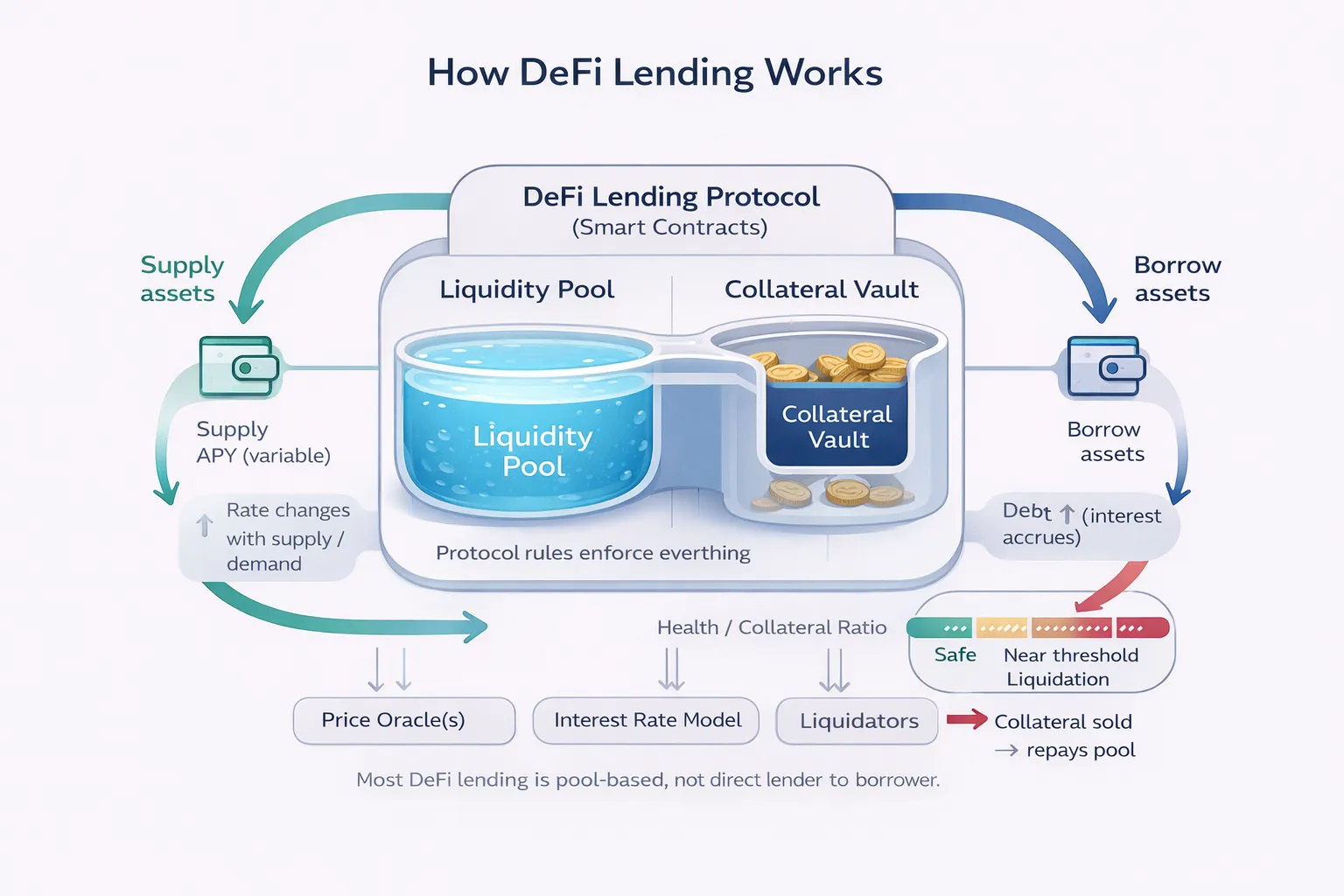
DeFi lending protocols operate on a simple premise: you borrow against crypto assets you already own. This mechanism creates a direct link between market volatility and your on-chain reputation. When the collateral value drops below a required threshold, the protocol triggers a liquidation to protect lenders. This event is not merely a financial loss; it is a public record that damages your crypto credit score.
Unlike traditional bank loans, where missed payments slowly erode a FICO score over years, a DeFi liquidation is instantaneous and binary. The protocol’s smart contract automatically sells your collateral, often at a discount, to cover the debt. This action is logged on the blockchain, visible to any credit scoring algorithm or data aggregator monitoring your wallet address. For platforms like Gio Ratings or Fitch Ratings, which assess counterparty risk using on-chain data, this history of liquidations signals high risk and poor risk management.
The impact on your credit profile is severe. A single liquidation can trigger a sharp drop in your score, making future borrowing more expensive or impossible. Repeated liquidations label your wallet as a "bad actor" in the decentralized finance ecosystem, effectively blacklisting you from prime lending rates. This is why understanding liquidation thresholds is not optional—it is the foundation of building a trustworthy on-chain identity.
Institutional Ratings vs. On-Chain Scores
The crypto credit landscape in 2026 is divided into two distinct systems. One serves institutions assessing counterparty risk, while the other helps consumers gauge their on-chain reputation. Understanding this split is essential for navigating DeFi lending.
Institutional Counterparty Ratings
Institutional models, such as those from Agio Ratings, focus on exchanges and custodians. These scores measure the financial health and operational security of the entities holding your assets. They rely on daily-updated on-chain data to assess counterparty risk, providing a safety net for large capital deployments.
Consumer Wallet Reputation
Consumer-facing scores operate differently. They analyze individual wallet history to create a "crypto-native credit score." This system bridges the gap in traditional risk assessment by looking at lending history and transaction patterns. It aims to make DeFi lending more inclusive by replacing KYC-heavy checks with on-chain behavior analysis.
Key Differences in Data Sources
The primary distinction lies in what is being measured. Institutional ratings evaluate the stability of the platform. Consumer scores evaluate the behavior of the user. This separation ensures that platform risk does not automatically penalize a responsible borrower, and vice versa.
| Feature | Institutional Ratings | Consumer Scores |
|---|---|---|
| Primary Focus | Counterparty Risk | Wallet Reputation |
| Data Source | Exchange/Custodian Data | On-Chain History |
| Update Frequency | Daily | Real-Time |
| Target User | Institutions | Retail Lenders |
Strategies for a stronger Web3 identity
Building a recognizable onchain credit profile requires treating your wallet like a traditional financial account, but with stricter discipline. Lenders and reputation protocols assess your reliability through observable behavior rather than personal details. To establish a robust score, you must focus on three core behaviors: managing loan-to-value ratios, diversifying your collateral, and avoiding defaults.
Maintain healthy loan-to-value ratios
Your loan-to-value (LTV) ratio is the single most important metric for your onchain credit score. This figure represents the percentage of your loan relative to the value of the collateral you lock up. A lower LTV signals lower risk to lenders, making your wallet appear more trustworthy. Aim to keep your LTV below 50% whenever possible. High LTV positions are volatile; a small market dip can trigger liquidation, which severely damages your reputation. Consistently low leverage demonstrates financial stability and responsible borrowing habits.
Diversify your collateral
Relying on a single asset type for collateral introduces unnecessary risk. If that asset crashes, your entire position is threatened, and a liquidation event will hurt your credit standing. Spreading your collateral across multiple stablecoins and blue-chip assets like ETH or BTC smooths out volatility. This diversification acts as a buffer, ensuring your loans remain solvent even during market downturns. Lenders view this prudence favorably, as it indicates you understand risk management and are less likely to default.
Avoid frequent defaults
A default is a permanent scar on your onchain identity. Unlike traditional credit, where disputes can sometimes be resolved, onchain defaults are immutable. They signal to the entire DeFi ecosystem that you are an unreliable borrower. Avoiding defaults requires proactive management: set up automated alerts for price movements and maintain a safety margin of excess collateral. If you anticipate cash flow issues, repay your loans early or refinance rather than letting them liquidate. A clean history of on-time repayments is the fastest way to build a high-value Web3 identity.
No comments yet. Be the first to share your thoughts!