
The decentralized identity limits to account for
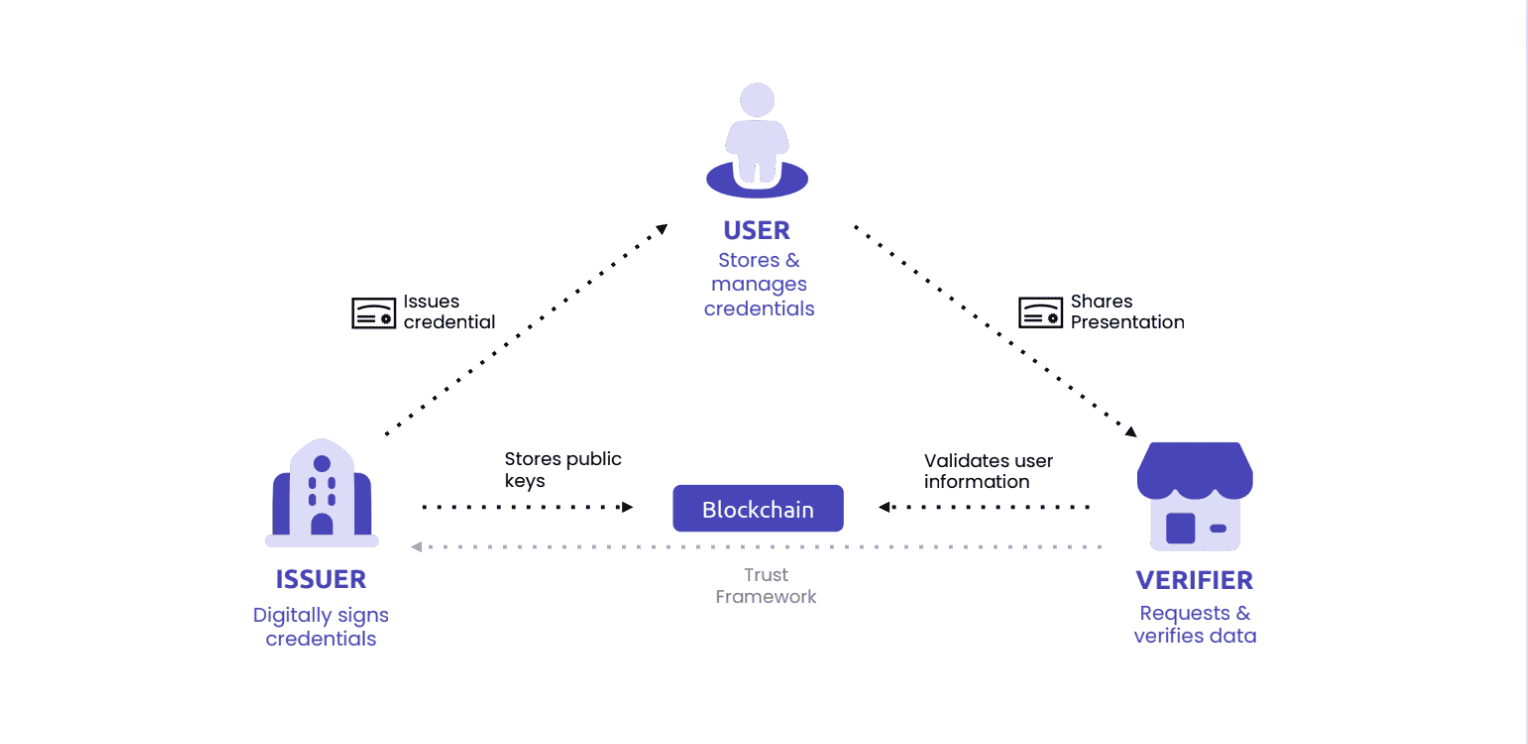
Decentralized identity shifts control from central servers to the individual. Instead of relying on a single entity to store and verify your data, you hold the keys. This framework allows you to manage personal information without depending on a central authority, solving many privacy issues inherent in traditional systems.
The difference between decentralized identity and traditional identity is structural. In traditional models, like government-issued IDs or social logins, one entity stores and verifies your identity. If that entity is breached, your data is exposed. Decentralized identifiers (DIDs) use distributed ledger technologies to authenticate users, ensuring no single point of failure exists.
An example of a decentralized identifier follows the DID URL scheme, such as did:ethr:0xab16a96d359ec26a11e2c2b3d8f8b8942658e32f. These identifiers can be resolved across various trusted data storage methods, including distributed ledgers and peer-to-peer networks. This structure enables you to prove your creditworthiness without handing over your entire transaction history to a lender.
Verifying your identity on blockchain involves interacting with your digital wallet. You typically log into a service via a web browser, select a verification option, and provide necessary details like your name or address. The system then uses cryptographic proofs to confirm your identity without storing the raw data on a centralized database. This process ensures that only the information needed for a specific credit score calculation is shared.
Decentralized identity choices that change the plan
Adopting decentralized identity (DID) for credit scoring shifts control from institutions to individuals, but it introduces specific technical and practical tradeoffs. Unlike traditional systems where a bank verifies your identity against a central database, DID relies on self-sovereign principles. This means you hold the cryptographic keys to your data. While this offers superior privacy and reduces the risk of large-scale data breaches, it also places the entire burden of security and usability on the user.
When evaluating decentralized identity solutions for crypto credit scores, consider these four critical factors:
| Evaluation Factor | Traditional Centralized | Decentralized (DID) | Key Tradeoff |
|---|---|---|---|
| Data Ownership | Stored by institution | Stored in user wallet | Full control vs. backup responsibility |
| Verification Speed | Instant via API | Requires cryptographic proof | Privacy vs. latency |
| Recovery Options | Password reset via email | Recovery phrases or social graphs | Convenience vs. irreversible loss |
| Interoperability | Closed ecosystems | Cross-chain standards | Fragmentation vs. universal access |
Control vs. Convenience
In a centralized system, if you forget your password, customer service resets it. In a decentralized identity framework, you are your own bank. If you lose your private keys or recovery phrase, your identity and associated credit history are inaccessible forever. There is no central authority to call. This tradeoff offers ultimate privacy but demands strict personal security hygiene. You must manage your own backups, which can be daunting for non-technical users.
Privacy vs. Verification Latency
Centralized credit bureaus verify identity instantly by querying internal databases. Decentralized verification requires cryptographic proofs. You must generate a zero-knowledge proof or present a verifiable credential from a trusted issuer. This process takes more time and computational effort. However, it ensures that lenders only see the minimum necessary data (e.g., "credit score > 700") without accessing your full transaction history. This selective disclosure protects your financial privacy but slows down the onboarding process.
Interoperability Challenges
Traditional identity systems are siloed; a bank ID rarely works for a government service. Decentralized identifiers aim for universal interoperability across blockchains and platforms. However, the ecosystem is still fragmented. Not all lenders accept DIDs, and standards like W3C DID are still gaining traction. You may find that a DID wallet works for one crypto lending platform but not another. This fragmentation limits the immediate utility of decentralized identity for mainstream credit scoring, though it offers long-term potential for seamless cross-platform identity.
How to choose a decentralized identity provider
Decentralized identity (DID) shifts control from centralized databases to the user. For crypto credit scoring, this means your on-chain activity becomes your credit history. Choosing the right DID provider determines how easily lenders can verify your financial behavior.
This section outlines the practical steps to evaluate and select a provider. Focus on interoperability, privacy controls, and integration with existing DeFi protocols.

Ensure the provider supports the W3C DID standard. This ensures your identifier works across different platforms and wallets. Non-compliant systems create silos that limit your credit portability.
Look for zero-knowledge proof (ZKP) capabilities. These allow you to prove you meet credit thresholds without revealing your entire transaction history. This protects your financial data from public exposure.
Check if the provider integrates with major lending platforms. Seamless integration reduces friction when applying for loans. Providers with broad API support offer more lending opportunities.
The best technology fails if users cannot navigate it. Test the onboarding flow for clarity and speed. A smooth verification process encourages consistent identity management and credit building.
Spotting Weak Options in Decentralized Identity
The promise of decentralized identity (DID) for crypto credit scores is strong, but the market is full of weak options. Many platforms claim to offer self-sovereign credit verification while secretly relying on centralized databases. This defeats the purpose of DID, which is to let you control your data without a central authority.
Watch out for platforms that require you to upload government IDs to a single server. This is not decentralized identity; it is just a digital version of the old system. True DID uses distributed ledgers to store credentials, allowing you to prove your identity without revealing your entire history. If a service asks for your full name, address, and date of birth in one go, it is likely not using proper decentralized methods.
Another common mistake is choosing tools that do not support standard DID methods. The W3C standard is the only reliable way to ensure your credentials are portable across different crypto platforms. Without this standard, your credit score might be locked into one ecosystem, making it useless elsewhere. Always check if the platform supports DIDcomm and W3C Verifiable Credentials.
Finally, be wary of services that do not allow you to revoke access. In a decentralized system, you should always be able to withdraw your consent and delete your data. If a platform makes it hard to delete your information, it is not truly decentralized. This lack of control is a major red flag that the service is not built for the future of crypto credit.
Decentralized identity: what to check next
Understanding how decentralized identifiers (DIDs) work is essential for anyone looking to build a crypto credit score without surrendering personal data. These systems shift control from centralized databases to the individual user.
These distinctions highlight why decentralized identity is critical for the future of crypto credit scoring. By removing the need for a central authority, you reduce the risk of mass data breaches while maintaining verifiable trust.
No comments yet. Be the first to share your thoughts!