
What defines a crypto credit score in 2026
A crypto credit score in 2026 is a risk assessment metric that evaluates a borrower’s ability and willingness to repay debt using on-chain data rather than traditional banking history. Unlike the FICO model, which relies on decades of credit card payments and loans reported to bureaus, on-chain scoring analyzes wallet behavior, transaction history, and collateral health. This shift allows lenders to assess creditworthiness for individuals who may have no formal financial footprint, known as the unbanked or underbanked.
The foundation of this system is public ledger data. Every transaction, swap, and loan repayment is permanently recorded on the blockchain. Lenders aggregate this data to build a reputation score. For example, a wallet that consistently repays DeFi loans on time and maintains a healthy collateral-to-debt ratio will receive a higher score. Conversely, wallets with histories of liquidations or dormant activity may be flagged as high-risk.
This approach does not replace traditional scoring entirely but complements it. FICO has begun integrating crypto data into its models, creating a hybrid system. However, the core of the crypto credit score remains distinct: it is permissionless, transparent, and based on real-time asset performance rather than retrospective credit reports. This allows for more dynamic lending terms that adjust based on current market conditions and individual wallet behavior.
On-chain reputation systems vs off-chain data
The crypto lending landscape is split between two distinct methods for assessing borrower trust. One relies on native on-chain reputation, analyzing wallet history and transaction patterns directly on the blockchain. The other integrates traditional credit data, often pulling in off-chain scores from major agencies to bridge the gap between Web2 and Web3 finance.
Native on-chain reputation
On-chain reputation systems evaluate a borrower based on their visible blockchain activity. This includes transaction history, asset holdings, and repayment behavior on decentralized protocols. Because this data is public and immutable, it offers a transparent view of financial behavior without requiring personal identification. However, it can be noisy; a single wallet might engage in high-risk speculation alongside conservative lending, making the signal harder to parse.
Off-chain credit integration
Hybrid models seek to improve accuracy by incorporating traditional credit scores. In 2023, TransUnion began delivering credit scores for individuals applying for loans on blockchain-based protocols, allowing users to leverage their established financial history without compromising privacy [src-serp-2]. This approach allows lenders to assess risk using familiar metrics, potentially lowering interest rates for borrowers with strong traditional credit profiles.
Comparison of models
The table below contrasts these two approaches across key dimensions relevant to lending decisions.
| Dimension | On-Chain Reputation | Off-Chain Integration |
|---|---|---|
| Data Source | Wallet history, transaction volume, on-chain assets | Traditional credit bureaus, bank statements, income verification |
| Privacy | Pseudonymous; data is public on the blockchain | Requires PII disclosure; data is encrypted and controlled |
| Accessibility | Open to anyone with a wallet; no ID required | Limited to users with an established credit history |
| Risk Model | Behavioral analysis of on-chain activity | Statistical probability of repayment based on past debt |
The choice between these models often depends on the borrower's background. Those with deep DeFi experience may prefer on-chain systems for their privacy and speed, while those with strong traditional credit may benefit from hybrid models that offer lower rates based on proven financial responsibility.
Key protocols building crypto-native scores
The transition from opaque traditional credit models to transparent on-chain scoring is being driven by specific protocols that prioritize verifiable financial history. These projects are not merely aggregating data; they are constructing the infrastructure for identity and reputation in decentralized finance. By linking wallet activity to lending capabilities, they remove the friction of traditional KYC while maintaining risk controls.
The landscape is defined by three distinct approaches to scoring: decentralized identity aggregation, on-chain credit reporting, and collateralized borrowing mechanics.
Guild: Decentralized Identity Aggregation
Guild operates at the intersection of social reputation and financial utility. It aggregates data from multiple decentralized identity (DID) providers to create a unified profile. This approach allows users to prove their standing in the ecosystem without exposing raw transaction history to every lender. Guild’s model is particularly relevant for protocols seeking to onboard users who have strong social capital but lack a traditional credit file.
Creditcoin: On-Chain Credit Reporting
Creditcoin functions as a bridge between traditional credit reporting agencies and the blockchain. It ingests off-chain credit data and maps it to on-chain identifiers, allowing DeFi protocols to access verified creditworthiness. This hybrid model addresses the "blank slate" problem for new crypto users, providing a foundation for lending decisions that goes beyond simple collateral ratios.
Bitcoin-Backed Lending Protocols
While not a "score" in the traditional sense, protocols facilitating Bitcoin-backed loans represent the dominant form of crypto-native credit in 2026. These platforms use collateralization ratios rather than credit scores to determine loan-to-value (LTV) limits. This mechanical approach removes subjective scoring entirely, relying instead on real-time asset valuation. It is the most liquid and widely used form of crypto credit, though it requires significant capital outlay.
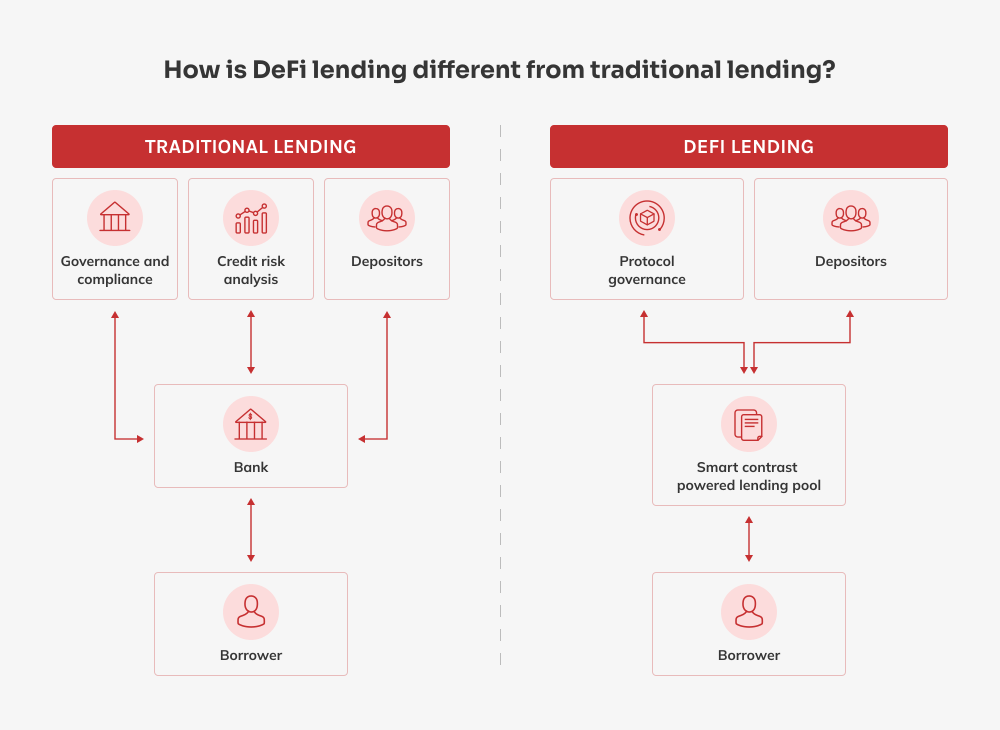
Comparison of Scoring Models
| Protocol Type | Data Source | Primary Use Case | Risk Model |
|---|---|---|---|
| Guild | DID Aggregation | Identity Verification | Social/Reputation |
| Creditcoin | Off-Chain Credit | DeFi Onboarding | Hybrid Credit |
| BTC Lending | On-Chain Collateral | Liquidity Provision | Collateralized |
The choice of protocol depends on the user's existing footprint. Those with established on-chain history benefit from Guild's aggregation, while those with traditional credit files may find Creditcoin more advantageous. For immediate liquidity, Bitcoin-backed lending remains the most straightforward, albeit capital-intensive, option.
Market trends driving credit score adoption
The shift toward on-chain credit scoring is driven by the collision of institutional capital requirements and the limitations of collateral-only DeFi models. Traditional lending relies on static financial history, while on-chain protocols require dynamic risk assessment to unlock uncollateralized lending. This gap has created a demand for credit scores that translate wallet activity into actionable risk metrics.
Institutional adoption is the primary catalyst. As crypto assets move from speculative holdings to core portfolio components, lenders require the same underwriting rigor found in traditional finance. On-chain credit scores provide the transparency needed for these institutions to price risk accurately without demanding excessive collateral. This standardization allows DeFi protocols to scale beyond simple flash loans into more complex, credit-based financial products.
The need for uncollateralized lending is equally critical. Requiring 100% collateralization ties up capital and reduces efficiency. By leveraging on-chain credit scores, lenders can offer loans based on a borrower’s historical repayment behavior and asset stability. This model mirrors traditional credit systems, enabling borrowers to access liquidity while maintaining exposure to their crypto assets.
Market volatility further necessitates these dynamic models. Static collateral ratios fail to account for rapid price swings, leading to unnecessary liquidations. On-chain credit scores integrate real-time data to adjust lending parameters dynamically. This approach reduces systemic risk and provides a more stable lending environment for both borrowers and lenders.

Risks and limitations of current models
While on-chain credit scores offer a path to financial inclusion, they introduce distinct vulnerabilities that traditional models do not. The primary concern is data privacy. Unlike traditional credit reports, which are private and secured, blockchain data is public and immutable. Every transaction is visible to anyone with a wallet address, creating a permanent, transparent ledger of your financial behavior. This lack of anonymity means that your creditworthiness is exposed to the entire network, raising significant concerns about surveillance and data misuse.
Another critical limitation is the potential for manipulation. On-chain scores can be gamed through sophisticated techniques such as wash trading or the use of sybil accounts. An entity can artificially inflate its transaction volume or asset holdings to appear more creditworthy than it is. While protocols are developing better detection methods, the decentralized nature of crypto makes it difficult to verify the true identity behind an address, leaving scores vulnerable to inflation and fraud.
Regulatory frameworks for these scores are also immature. Traditional credit reporting is governed by strict laws like the Fair Credit Reporting Act (FCRA) in the US, which provide consumers with rights to dispute errors and access their data. In contrast, on-chain credit scores operate in a regulatory gray area. There is currently no standardized legal recourse for users if a score is calculated incorrectly or if a protocol discriminates based on on-chain history. This regulatory uncertainty adds a layer of risk for both lenders and borrowers.
The immaturity of these systems is further highlighted by the evolving nature of crypto crime. As detailed in the Chainalysis 2026 Crypto Crime Report, the landscape of financial crime is constantly shifting, with new methods of exploitation emerging regularly. This volatility makes it challenging to establish stable, long-term credit models that can reliably assess risk over time.
No comments yet. Be the first to share your thoughts!