
What defines a crypto credit score in 2026
A crypto credit score is a risk assessment model that evaluates a borrower’s reliability using on-chain transaction history rather than traditional income verification or debt-to-income ratios. Unlike the FICO score, which relies on a centralized history of loans and credit cards, this model analyzes wallet behavior, collateralization levels, and repayment consistency across decentralized finance (DeFi) protocols. The goal is to bridge the gap in risk assessment, rendering DeFi lending more robust and inclusive for users who lack a conventional credit footprint [1].
In 2026, the distinction between traditional finance and crypto-native scoring has become sharper. Traditional credit bureaus do not report stablecoin transactions or DeFi lending activity. Consequently, a "crypto credit score" is not a direct translation of a FICO number but a separate data layer. It assigns a risk rating based on observable chain data: how much collateral a user locks, whether they repay loans on time, and the stability of their asset holdings. This allows lenders to price loans accurately without requiring personal identification documents (KYC) for every transaction.
This shift moves creditworthiness from a static, historical snapshot to a dynamic, real-time profile. A user might have no credit history in the traditional sense but maintain a high crypto credit score by consistently managing leveraged positions or repaying flash loans. This model prioritizes capital efficiency and on-chain discipline over employment history, creating a parallel financial identity that operates independently of the legacy banking system.
Note: This is not a FICO score but a risk assessment model based on wallet history. It does not directly report to Equifax or TransUnion.
The integration of on-chain data into credit scoring represents a structural change in how risk is priced. It replaces the reliance on institutional trust with cryptographic verification. While early models focused simply on over-collateralization, newer frameworks in 2026 incorporate behavioral signals, such as the longevity of wallet activity and the diversity of assets held, to create a more nuanced view of borrower reliability [2].
On-chain signals that build credit history
Traditional credit bureaus rely on a narrow set of financial behaviors, but credit scoring models in the decentralized finance (DeFi) space analyze a much broader spectrum of on-chain activity. These models treat the blockchain as a ledger of financial discipline, examining wallet balances, transaction frequency, and participation in lending protocols to construct a reputation score. Instead of a single FICO number, this approach creates a dynamic profile based on actual asset management.
The foundation of this analysis is wallet balance and liquidity. Scoring algorithms prioritize wallets that maintain consistent, non-zero balances over long periods, viewing them as stable and reliable counterparties. A wallet that frequently dips to zero or experiences erratic, large-volume transfers is often flagged as high-risk. This stability is not just about wealth; it is about consistency. Just as a traditional borrower’s payment history matters, a crypto user’s ability to hold and manage assets without erratic behavior signals financial maturity.
Transaction frequency and pattern also play a critical role. Regular, predictable transactions—such as consistent staking rewards, periodic loan repayments, or steady DeFi yield farming—are viewed more favorably than sporadic, high-volume trading. These patterns help models distinguish between speculative gambling and structured financial engagement. By analyzing the rhythm of these interactions, scoring systems can infer a user’s understanding of market cycles and their commitment to long-term financial strategies.
Participation in DeFi lending and borrowing protocols provides the most direct credit signal. When a user supplies collateral to a protocol like Aave or Compound, their repayment history and collateralization ratio become part of their on-chain identity. A history of timely repayments and healthy collateral ratios builds a positive credit narrative. Conversely, liquidations or missed payments are recorded permanently on the blockchain, creating a transparent but unforgiving credit history. This data is increasingly integrated into traditional risk assessments, allowing institutions to evaluate counterparty risk with greater granularity.
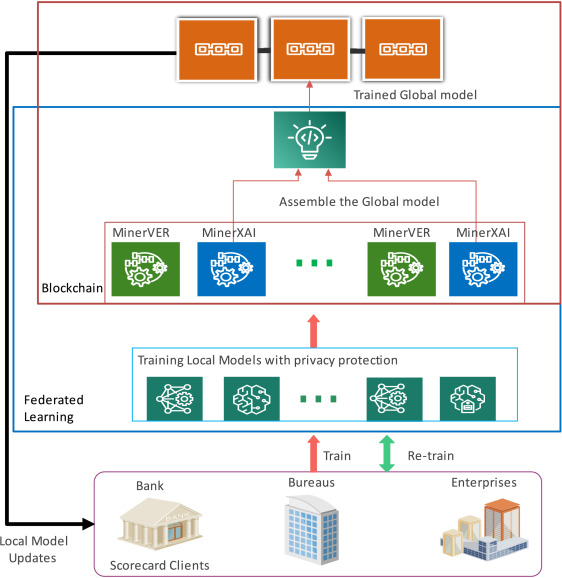
The integration of these on-chain signals into traditional finance is still evolving. While some platforms are beginning to use this data for underwriting, most institutions remain cautious due to the volatility of crypto assets and the regulatory uncertainty surrounding on-chain identity. However, the trend is clear: as blockchain data becomes more standardized and verifiable, it will likely serve as a complementary layer to traditional credit reports, offering a more complete picture of a borrower’s financial behavior.
Bridging DeFi Activity to Traditional Credit
The integration of on-chain reputation into off-chain lending represents a structural shift in how financial risk is assessed. Traditional credit models rely heavily on historical debt repayment data, which excludes those without a banking history. DeFi, by contrast, offers a transparent ledger of financial behavior that can serve as a proxy for creditworthiness. This mechanism allows users to build a "crypto-native" credit score, bridging the gap between decentralized activity and centralized financial opportunities.
The core distinction lies in the lending model. Crypto-backed loans are collateral-based, meaning borrowers lock up assets to secure funds, removing the need for a traditional credit check. However, credit-based lending seeks to evaluate the borrower’s reliability without requiring full asset liquidation. By analyzing on-chain data—such as wallet age, transaction consistency, and DeFi protocol usage—lenders can construct a risk profile that mirrors traditional FICO or VantageScore metrics.
| Feature | CeFi Collateralized Loans | DeFi Credit-Based Lending |
|---|---|---|
| Primary Basis | Asset Collateral | On-Chain Reputation |
| Credit Check | Not Required | Required (On-Chain) |
| Asset Lock | Full or Partial Lock | No Lock (Unsecured) |
| Risk Model | Liquidation Risk | Default Risk |
This transition enables a more inclusive financial system. Individuals who lack traditional credit histories but demonstrate responsible financial behavior on-chain can gain access to off-chain credit products. As regulatory frameworks evolve, the standardization of these on-chain metrics will determine how effectively they are adopted by traditional financial institutions.
| Feature | CeFi Collateralized | DeFi Credit-Based |
|---|---|---|
| Primary Basis | Asset Collateral | On-Chain Reputation |
| Credit Check | Not Required | Required (On-Chain) |
| Asset Lock | Full or Partial Lock | No Lock (Unsecured) |
| Risk Model | Liquidation Risk | Default Risk |
Market growth and institutional adoption
The infrastructure for crypto credit is expanding rapidly, driven by a convergence of retail demand and institutional risk management. By 2026, the global crypto credit card market size was valued at approximately $3.81 billion, with projections indicating growth to $10.71 billion by 2035 at a 19% compound annual growth rate (CAGR) [src-serp-3]. This expansion reflects a maturing ecosystem where on-chain data serves as the primary mechanism for underwriting.
Institutional players are adapting to the continuous nature of digital asset markets. Major US exchanges are adjusting their operational frameworks to support 24/7 cryptocurrency options and futures trading, beginning in May 2026, to align with the non-stop liquidity of crypto assets [src-serp-8]. This operational shift underscores the necessity for credit systems that can assess collateral volatility in real-time rather than relying on traditional end-of-day reporting.
The integration of on-chain history into traditional credit models reduces information asymmetry. Lenders now utilize transparent ledger data to verify income stability and asset holdings, creating a more robust collateral base for credit products. This data-driven approach allows for dynamic credit limits that adjust based on real-time portfolio performance, bridging the gap between decentralized finance mechanics and regulated financial services.
Risks and regulatory considerations
Crypto-native credit scores introduce a new layer of complexity to financial risk assessment. Unlike traditional FICO scores, these on-chain metrics rely on transaction history and wallet behavior, which creates unique privacy and accuracy challenges. Because blockchain data is public, every transaction is visible, raising significant concerns about user anonymity and data exposure.
Regulatory uncertainty further complicates adoption. As noted in legal analysis from Cardozo Law, the field aims to bridge gaps in DeFi lending, but it operates in a gray area where traditional credit laws do not clearly apply. Without clear federal guidelines, the reliability of these scores remains inconsistent across different platforms.
The integration of on-chain data with traditional finance also introduces technical risks. Data accuracy depends on the quality of the oracle feeds and the algorithms used to interpret wallet activity. Errors in this process can lead to incorrect risk profiles, potentially locking users out of capital or exposing lenders to unforeseen defaults. Until regulatory frameworks mature, users must treat these scores as experimental tools rather than definitive financial judgments.
No comments yet. Be the first to share your thoughts!